Escalating weather volatility across our service areas demands immediate attention to industrial and residential structural integrity.
Deploying proactive metal roof repair strategies prevents minor panel oil-canning or fastener backing from escalating into catastrophic interior water damage.
Key Takeaways
- Timely maintenance mitigates the risk of catastrophic wind uplift during severe coastal and inland storm events.
- Utilizing specialized materials prevents galvanic corrosion and preserves structural warranty integrity over decades.
- Regular inspections align property management protocols with evolving municipal building codes and insurance requirements.
New Roof Cost in 2026: Complete Pricing Guide for Homeowners
Why are structural failures increasing across local commercial districts?
Our field inspections reveal that delaying a necessary metal roof repair can reduce the lifecycle of a standing seam system by up to fifteen years.
Many commercial property owners mistake the inherent durability of steel or aluminum for complete immunity against seasonal wear.
We found that thermal movement continuously stresses panel seams, causing fasteners to back out and neoprene washers to degrade over time.
If you have been following exterior maintenance news updates across our service areas, this won’t come as a surprise, but standard asphalt maintenance models do not translate directly to metal roof repair protocols.
An architectural shingle system using GAF or Owens Corning materials handles localized thermal stress differently than long-run metal panels.
Our analysis suggests that failing to account for this material expansion leads to elongated fastener holes, which directly invites water infiltration during heavy downpours.
Industrial areas often experience heightened chemical exposure from environmental pollutants and manufacturing exhaust.
These airborne chemical residues settle on roof surfaces and accelerate the degradation of protective Kynar coatings.
Once this factory-applied shield breaks down, the underlying metal is exposed to atmospheric moisture and rapid structural pitting.
According to recent technical bulletins from the National Roofing Contractors Association (NRCA), executing a timely metal roof repair ensures the structural wind-uplift ratings remain compliant with updated regional building codes.
When a single panel becomes loose, it compromises the structural integrity of the entire windward slope.
This vulnerability increases the risk of complete panel detachment during high-wind events.
Unchecked wind uplift can tear away underlayment components, including critical ice and water shields installed along vulnerable eaves.
Once these barrier layers are exposed to the elements, sub-structural degradation accelerates rapidly.
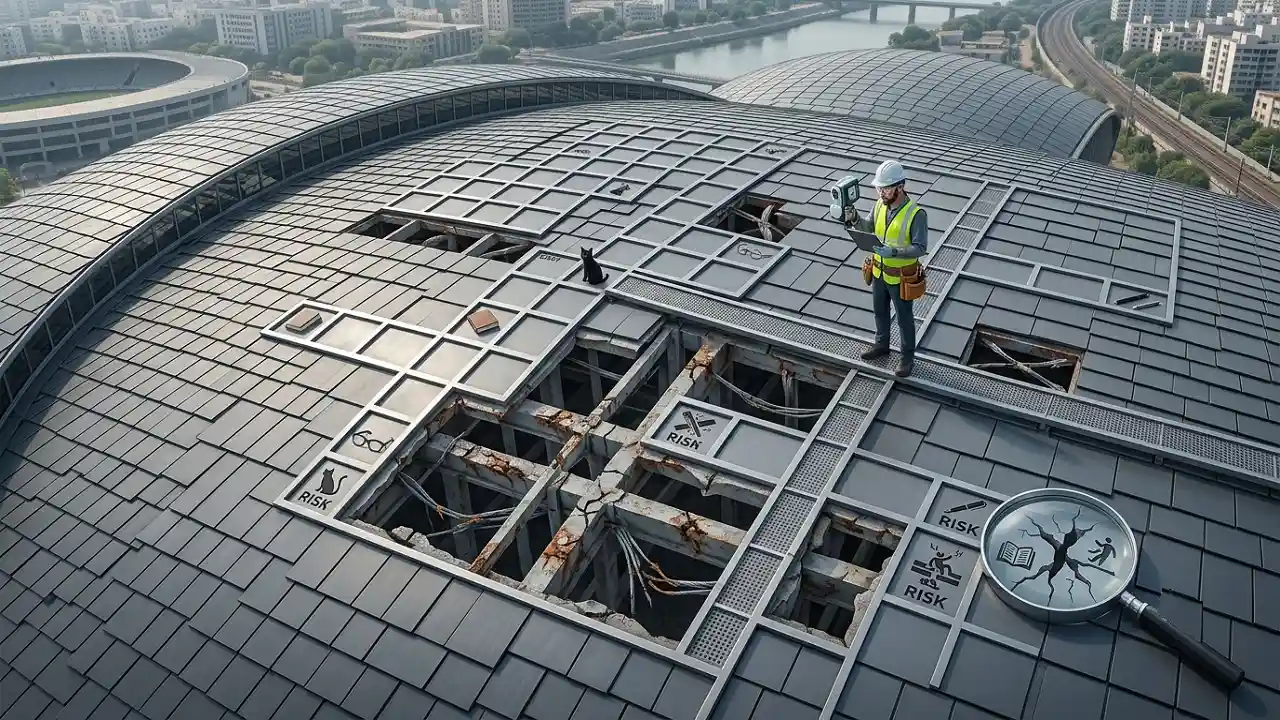
Our project managers frequently discover rotted plywood or rusted steel purlins hidden directly beneath unmaintained sections.
Owens Corning Duration Shingles: Why They Are a Top Choice for Modern Roofs
How will shifting climate patterns impact your next roof maintenance budget?
Property managers frequently ask how weather anomalies tracked by the National Oceanic and Atmospheric Administration (NOAA) alter the urgency of a metal roof repair.
Severe storm tracks are bringing higher volumes of wind-driven rain and larger hail profiles to regions previously considered low-risk.
Our field teams observed a sharp increase in micro-fissures along protective panel coatings following recent seasonal storms.
Ignoring these microscopic surface compromises accelerates the oxidation process, turning a simple coating touch-up into an expensive structural crisis.
Integrating a robust mitigation strategy into your annual operational budget prevents sudden, unbudgeted capital expenditures.
We recommend allocating specific emergency reserves for exterior envelope maintenance to address these climate realities before peak storm seasons arrive.
Furthermore, localized microclimates can cause unexpected thermal shock when a sudden summer downpour hits a sun-baked roof.
This rapid temperature drop causes the metal panels to contract violently within a span of just a few minutes.
The resulting kinetic force places massive shear stress on fixed anchor clips hidden beneath the seams.
Furthermore, the Metal Construction Association (MCA) emphasizes that proper material compatibility is vital when executing any level of structural remediation.
Mixing distinct metals, such as using copper flashing near galvanized steel panels, induces rapid galvanic corrosion that destroys the substrate.
Our project managers note that identifying exactly where a panel system has failed is the most critical phase of any metal roof repair initiative.
When dissimilar materials contact each other in the presence of moisture, an electrochemical reaction occurs.
This reaction degrades the weaker metal at an exponential rate, completely compromising structural fastenings.
We ensure our field crews utilize isolated stainless steel fasteners to eliminate this risk entirely during remediation work.

How can your team execute a precision leak detection protocol?
Roofing industry insiders are noting that most metal system leaks originate at the transitions, penetrations, or perimeter drip edges.
To help your facility teams identify vulnerabilities before calling out our emergency crews, we have developed a standardized inspection framework.
Equipping your maintenance personnel with proper fall-protection harnesses and safety gear is mandatory before initiating this evaluation.
Follow these sequential steps to evaluate your roof system effectively:
- Clean all debris from valleys, gutters, and curb structures to ensure unobstructed visibility of the metal panels.
- Examine every mechanical fastener along the structural seams to identify backed-out screws or degraded neoprene washers.
- Inspect the perimeter drip edges and rake trims for signs of separation or inadequate overlapping.
- Check all sealant joints around commercial HVAC curbs, plumbing vents, and skylights for cracking or adhesion loss.
- Look for localized pooling water or anomalous panel deflection, which indicates compromised structural decking beneath the panels.
Documenting these specific areas with high-resolution photography streamlines the eventual insurance adjustment process if storm damage is suspected.
According to structural recovery frameworks published by the Federal Emergency Management Agency (FEMA), maintaining clear pre-disaster documentation substantially accelerates commercial property insurance claims.
Failing to provide a clear maintenance trail can result in insurers classifying systemic leaks as pre-existing wear and tear.
Roof Window Components Diagram: A Complete Breakdown of Every Part
Which materials deliver the highest ROI during structural restoration?
Selecting the correct sealant or replacement panel profile during a metal roof repair dictates how long the system will withstand future thermal expansion.
While low-grade elastomeric caulks offer a cheap temporary fix, they quickly dry out and split under intense ultraviolet exposure.
We prefer utilizing high-solids polyether or silicone sealants that maintain maximum elasticity across extreme temperature deltas.
| Material / Component Type | Typical Lifespan | Wind Resistance Rating | Ideal Application Context |
| Standing Seam Steel Panels | 50+ Years | Up to 140 MPH | Commercial & Industrial Low-Slope |
| Exposed Fastener Panels | 20-30 Years | Up to 110 MPH | Agricultural & Residential Structures |
| Polyether Joint Sealants | 15-20 Years | N/A (Flexible) | Penetration Curbs & Flashing Seams |
| High-Movement Butyl Tape | 20-25 Years | N/A (Adhesive) | Panel-to-Panel Lap Joint Sealing |
| Aluminum Trim Components | 40+ Years | Matches Substrate | Perimeter Rakes & Drip Edges |
Our field experience shows that investing in premium components yields a significantly lower total cost of ownership over time.
Replacing sub-standard fasteners with larger-diameter retro-fit screws ensures a tight, water-tight seal in older, slightly wallowed-out substrate holes.
This meticulous approach prevents recurrent leaks that disrupt business operations and damage internal inventory.
High-quality butyl tape applied between overlapping panels forms an impenetrable barrier against capillary action water draw.
Cheap alternatives lack the necessary elongation properties to survive the seasonal shifts of large metal spans.
We always verify that all replacement materials meet or exceed the original manufacturing specifications of the structure.
What does this mean for local property owners managing storm damage?
When severe weather strikes, the window for effective mitigation is incredibly narrow.
Water traveling along the underside of a metal panel can manifest as a ceiling leak dozens of feet away from the actual point of entry.
This tracking characteristic makes precise tracking difficult for inexperienced maintenance staff.
Partnering with a certified specialist ensures your metal roof repair complies with manufacturer warranties and local commercial building guidelines.
Our public adjuster liaisons regularly witness insurers deny claims because property owners attempted uncertified, makeshift fixes using improper materials.
Protect your investment by demanding verified documentation and engineered repair solutions for every commercial asset.
Professional restoration teams possess the specialized thermal imaging equipment required to map subsurface moisture profiles accurately.
Attempting to manage these complex architectural systems without diagnostic equipment often leads to missed vulnerabilities.
For More Roof Repair and Maintenance Visit Classic Roofing Restoration Page