
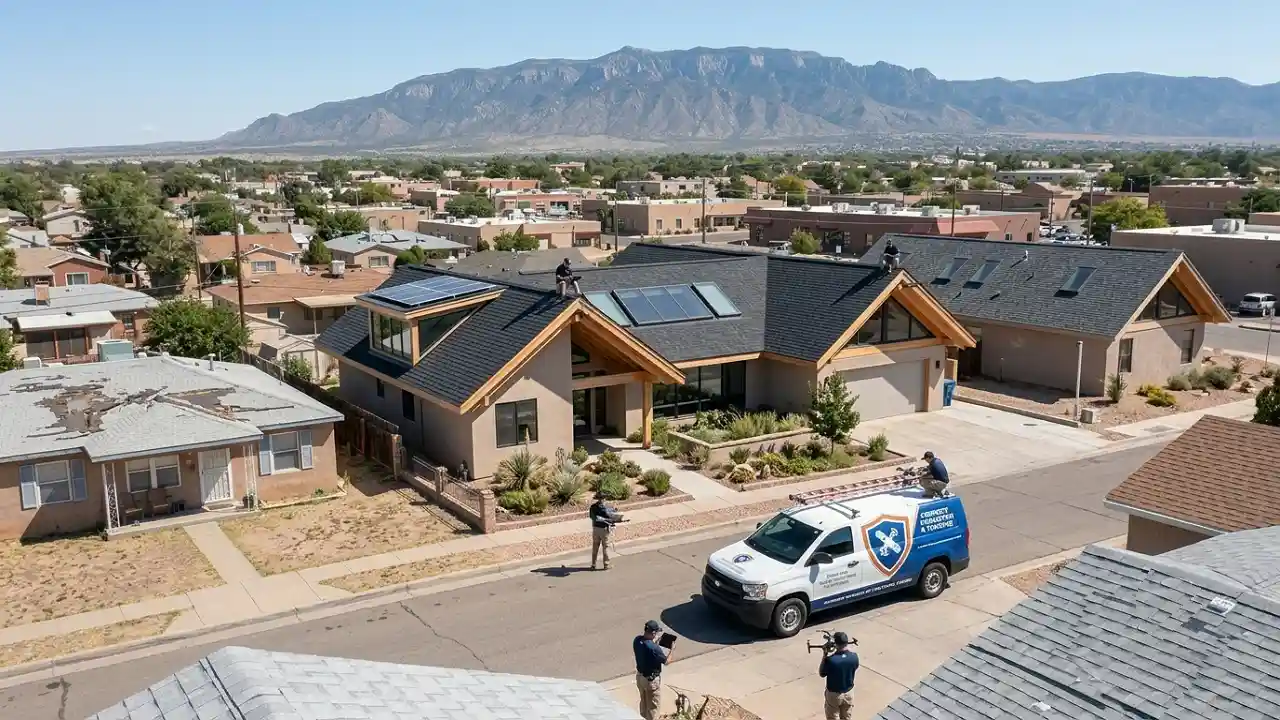
Increasingly volatile storm seasons place immense structural pressure on traditional triangular residential architectural shapes.
Upgrading your classic gabled roof system right now prevents costly structural decay before seasonal windstorms strike.
Property owners must actively optimize these high-pitch vectors to secure long-term asset value.
Metal Roofer Guidelines : Protect Your Property Asset
Key Takeaways
- Wind Vulnerability: The triangular design creates significant aerodynamic lift during high-wind events, requiring enhanced perimeter fastening.
- Moisture Management: Valley areas and rakes demand advanced flashing arrays to combat driving rains common in modern weather patterns.
- Insurance Leverage: Documenting proactive maintenance on pitch transitions streamlines damage claims with major national carriers.
If you’ve been following preventative maintenance updates across our service areas, this won’t come as a surprise.
Our field inspections reveal that geometric transition points on a standard gabled roof are failing at an accelerated rate due to intense climate shifts.
Many homeowners assume their pitched systems drain water flawlessly without realizing that valleys collect severe debris.
When leaf litter accumulates in these crucial junctions, it forces water backward under the shingle matrix.
This hidden water migration silently compromises structural roof decking long before an interior leak appears.
We found that a proactive approach to eaves and rake maintenance saves thousands in emergency restoration overhead.
What does this mean for local property owners?
Roofing industry insiders are noting that standard pitch configurations require far better stabilization than previously mandated.
A traditional gabled roof features two sloping sides that meet at a central ridge, creating an inverted V-shape.
While this pitch is excellent for shedding snow, it remains uniquely susceptible to wind uplift along the overhangs.
According to the latest installation design manuals from the National Roofing Contractors Association (NRCA), fastening schedules must be reinforced in high-wind zones.
Our project managers note that wind passing over the ridge creates a vacuum effect that pulls shingles away from the deck.
If your perimeter lacks a heavy-duty aluminum drip edge, the entire edge profile can detach during a severe convective storm.
We always install enhanced starter strips to anchor the perimeter against these severe upward aerodynamic forces.
Using premium materials like GAF Timberline HDZ or Owens Corning Duration shingles provides an engineered nailing zone for maximum retention.
Skimping on these initial installation details compromises the overall architectural integrity of your home.
Our field teams consistently witness the real-world difference that reinforced manufacturing specifications make during intense weather events.
Commercial Roofing Companies Near Me : Shield Asset Value
How will material selection impact your next roof repair budget?
Our analysis suggests that material compatibility directly influences how well a pitched system handles structural stress.
Different material combinations yield highly variable lifespans and wind resistance thresholds.
The technical application guidelines maintained by the Asphalt Roofing Manufacturers Association (ARMA) show that structural pitch affects shingle sealant adhesion times.
Choosing an inappropriate material class for a highly exposed architectural layout often cuts the expected lifespan in half.
We advise clients to evaluate long-term lifecycle costs instead of focusing entirely on upfront pricing models.
A cheap installation almost always translates to higher recurring maintenance liabilities down the road.
| Material Profile | Wind-Resistance Rating | Average Lifespan on Pitched Roofs | Primary Structural Benefit |
| Traditional 3-Tab Shingles | Up to 60 MPH | 12 to 15 Years | Lower Initial Installation Expense |
| Architectural Laminated Shingles | Up to 130 MPH | 25 to 30 Years | Enhanced Multi-Layer Dimensional Protection |
| Standing Seam Metal Panels | Up to 160 MPH | 50+ Years | Exceptional Fastener Longevity & Snow Shedding |
Selecting the right finish ensures your gabled roof can survive intense weather systems without requiring constant emergency repairs.
Standard three-tab products often struggle on highly exposed gables due to a lack of structural mass.
Our field teams observed that homes upgraded to thick architectural laminates experience significantly fewer wind-loss insurance events.
Protecting the vulnerable structural valley requires an unyielding commitment to premium material choices.
How should you schedule your seasonal maintenance?
Managing a pitched residential structure requires a systematic approach to identifying subtle component failures.
Our field technicians deploy specialized safety gear, including heavy-duty fall-arrest harnesses and high-traction roofing boots, before stepping onto any steep pitch.
Follow this strategic preventative maintenance protocol to ensure your residential framework remains completely watertight throughout the year:
Roof Washing Services : Shield Your Property From Rot
Phase 1: Visual and Edge Structural Auditing
- Examine the Ridge Cap Shingles: Inspect the top peak for cracking, detached fasteners, or advanced UV weathering.
- Check the Valley Flashing Systems: Clear away all accumulated organic debris and verify that the valley lining is not buckled or rusted.
- Audit the Gables and Rakes: Ensure the rake trim is firmly attached and that wind has not lifted the edge shingles away from the underlayment.
- Analyze the Gutter Drainage Velocity: Verify that the gutters slope correctly and do not back up water toward the structural fascia boards.
Phase 2: Underlayment and Interior Space Checks
- Inspect for Ice Dam Protection: Confirm that a self-adhering ice and water shield extends at least twenty-four inches past the interior wall line.
- Monitor Attic Ventilation Balances: Check that the intake soffit baffles are entirely clear to maintain a constant thermal equilibrium beneath the roof deck.
- Search for Sub-Surface Deck Rot: Look closely from inside the attic space for dark water rings or mold blooms along the plywood seams.
- Verify Flashing Seals Around Penetrations: Check the rubber boot seals around plumbing stacks and chimney counter-flashings for brittle fracturing.
We have seen countless homeowners suffer catastrophic interior damage because they overlooked these basic pitch transitions.
A poorly ventilated attic space accelerates shingle curling on a sunny gabled roof by trapping intense heat directly underneath the plywood deck.
This thermal stress destroys the modified bitumen self-healing properties of your primary waterproofing layers.
How do public adjusters evaluate pitched roof storm damage?
Our unique role as a public adjuster liaison provides us with deep insight into how major insurance carriers evaluate modern property damage.
When severe convective windstorms strike, wind data from the National Oceanic and Atmospheric Administration (NOAA) is cross-referenced with your home’s specific geographic coordinates.
Filing a claim for a damaged gabled roof requires verifiable proof of wind-driven structural compromise.
If an older gabled roof displays unaddressed rot or structural sagging along the ridge line, carriers frequently deny wind claims by citing pre-existing structural neglect.
Maintaining a clean, documented maintenance history proves that your asset was in excellent condition prior to a major disaster.
According to modern residential safety frameworks outlined by the International Code Council (ICC), building owners must maintain structural elements to standard code.
An unmaintained pitch assembly can lead to complete code compliance violations during a mandatory post-storm reconstruction project.
Our project managers note that utilizing certified installation teams guarantees your insurance documentation remains completely airtight.
When we execute repairs, we provide comprehensive photo portfolios that detail the exact condition of the underlying structural deck.
This clear transparency ensures that adjusters cannot claim your damage was caused by chronic, long-term degradation.
Residential Roofing Company Near Me : Protects Equity
What are the final steps to secure your structural envelope?
Ignoring the subtle signs of edge lifting or minor granule loss on a gabled roof inevitably results in severe structural failures.
A home with an unverified roof system is operating on borrowed time as seasonal weather patterns intensify across the country.
Scheduling a professional maintenance review before a major storm system develops remains the smartest financial decision a property manager can make.
Our dedicated team stands ready to implement the high-precision diagnostics and premium material applications your property requires.
We believe that maintaining a safe home starts with a completely uncompromised roof defense layer.


