Volatile weather shifts and tightening insurance regulations are forcing property owners to evaluate their structural vulnerabilities immediately.
When calculating long-term asset expenses, understanding exactly how long does a roof last dictates your entire exterior maintenance budget.
Key Takeaways
- Proactive maintenance can extend asset lifespan by up to fifty percent.
- Regional climate variations alter real-world material degradation timelines significantly.
- Documented annual inspections are now mandatory for retaining modern property insurance eligibility.
Commercial Roof Repair: The Ultimate Guide to Protecting Your Business
What does this mean for local property owners?
Our field inspections reveal that property owners frequently miscalculate how long does a roof last based on generic manufacturer timelines.
Relying purely on the box label fails to account for microclimates, thermal shock, and ventilation inefficiencies.
True protection requires analyzing how individual components handle local weathering cycles over consecutive decades.
According to data published by the Asphalt Roofing Manufacturers Association (ARMA), environmental factors drastically alter how long does a roof last in high-UV regions.
Solar radiation degrades the asphalt core of standard shingles much faster than baseline laboratory testing predicts.
Our project managers note that incorporating premium lines like GAF Timberline or Owens Corning Duration shingles provides superior granule retention to combat this accelerated aging.
Roofing Cop: The Ultimate Guide to Protecting Your Building’s Perimeter
| Material Type | Wind Resistance Rating | Average Lifespan Range | Primary Failure Factor |
| 3-Tab Asphalt Shingles | 60 mph | 12 to 18 Years | Granule Loss & Thermal Cracking |
| Architectural Shingles | 110 to 130 mph | 22 to 28 Years | Algae Growth & Severe Hail Impact |
| Standing Seam Metal | 140+ mph | 45 to 60 Years | Fastener Fatigue & Coating Degradation |
How will environmental shifts impact your next roof repair budget?
Roofing industry insiders are noting a massive spike in premature asset failures linked directly to volatile seasonal storms.
Data collected by the National Oceanic and Atmospheric Administration (NOAA) tracks an escalation in severe convective storms across our core service areas.
If you have been following preventative maintenance updates across our service territories, knowing how long does a roof last remains the ultimate metric for avoiding catastrophic structural failures.
When wind-driven rain compromises your exterior barrier, structural deterioration accelerates behind the scenes.
We found that utilizing enhanced structural standards, such as those recommended by the Insurance Institute for Business & Home Safety (IBHS), creates a highly resilient building envelope.
Installing heavy-duty ice and water shields along vulnerable valleys and eaves shields the underlying decking from cyclical rot.
Our field teams observed that minor visual defects often mask severe structural issues beneath the surface.
Property managers must monitor specific wear patterns before an isolated leak transforms into an emergency replacement project.
Review this red-flag checklist during your seasonal walkarounds to safeguard your system:
- Curled, cupped, or entirely missing shingle tabs along the ridge lines.
- Accumulations of mineral granules filling up the gutters and downspouts.
- Corroded or detached galvanized steel drip edges that allow water to wick backward into the fascia.
- Cracked or dry-rotted rubber boots surrounding plumbing vent pipes.
Tiling a Roof with Clay Tiles: Step-by-Step Installation Guide

What steps maximize structural durability over time?
Our analysis suggests that routine professional interventions directly determine how long does a roof last over its operational lifecycle.
Setting up a rigid preservation schedule protects the structural warranty while deferring capital replacement expenditures.
Our technicians utilize a strict sequence to ensure no hidden structural flaws escape remediation during seasonal maintenance visits.
1.Establish Ground Safety and Anchor Points:Prerequisite Phase.
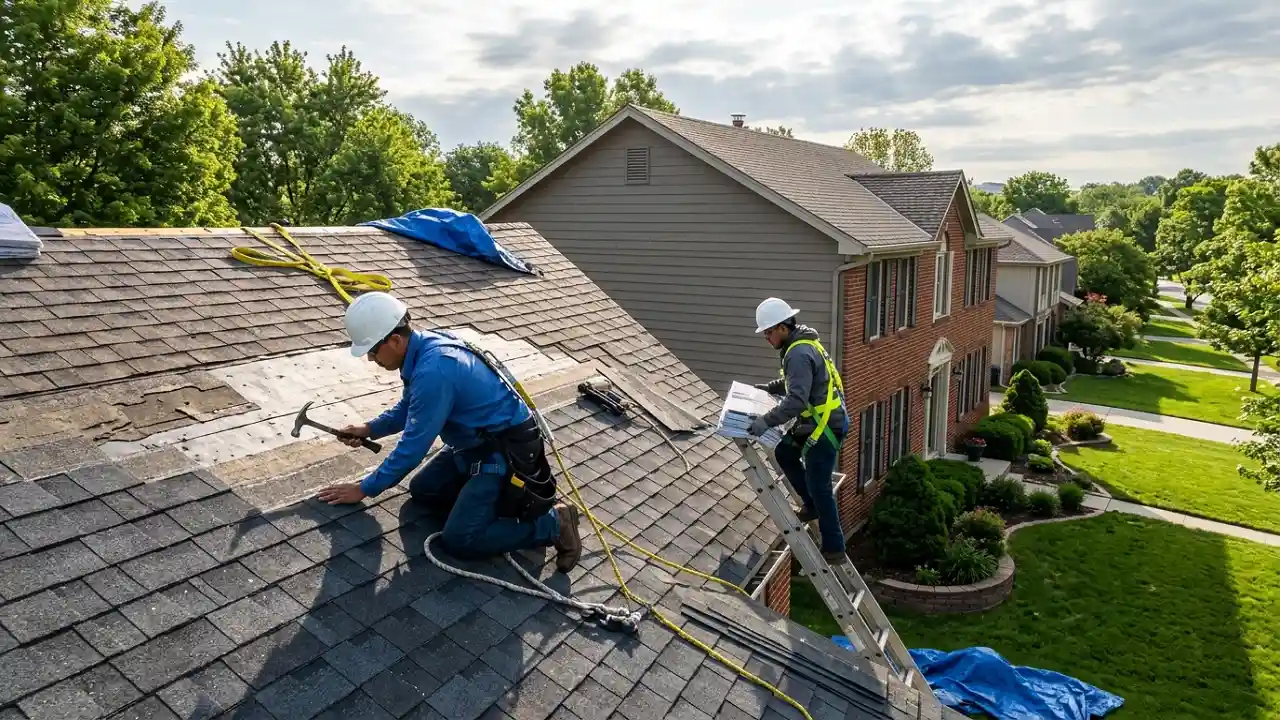
Technicians secure the perimeter and mount certified anchor points before ascending the structural slope.
Every team member dons an OSHA-compliant safety harness to eliminate fall risks during close-up material handling.
2.Execute Complete Debris Clearance:Initial Action.
Accumulated organic matter, pine needles, and leaves are cleared from valleys to restore proper drainage channels.
Clogged gutters are completely flushed to prevent water from backing up beneath the lower shingle courses.
3.Conduct Micro-Inspection of Flashings:Technical Assessment.
Inspectors manually examine the sealant bonds around chimneys, skylights, and mechanical ventilation structures.
Lifting or cracked counter-flashing components are immediately resealed using high-grade polyurethane compounds.
4.Document Structural Integrity for Insurance Records:Final Verification.
Our field specialists compile a comprehensive photographic ledger detailing every square of the asset envelope.
This structured record provides undeniable proof of regular upkeep if an emergency insurance claim occurs later.
How do insurance adjusters evaluate aging asset integrity?
As dedicated public adjuster liaisons, we interface daily with insurance carriers regarding storm-damage claims validation.
According to current building safety standards enforced by the National Roofing Contractors Association (NRCA), the benchmark guidelines for verifying pre-existing wear have tightened substantially.
Adjusters look closely at historical maintenance logs to verify if an owner actively mitigated ordinary wear and tear.
Our analysis suggests that major carriers are rewriting underwriting guidelines based on how long does a roof last under extreme weather pressures.
An unmaintained cover aged past fifteen years faces extreme scrutiny during standard hail damage adjustments.
Neglecting basic repairs will fundamentally compromise how long does a roof last, leading to denied claims when a severe storm hits.
We highly recommend archiving every professional repair invoice alongside your original structural installation paperwork.
Proving that your system received routine updates prevents adjusters from applying heavy depreciation deductions due to neglect.
For More Roof Repair and Maintenance Visit Classic Roofing Restoration Page