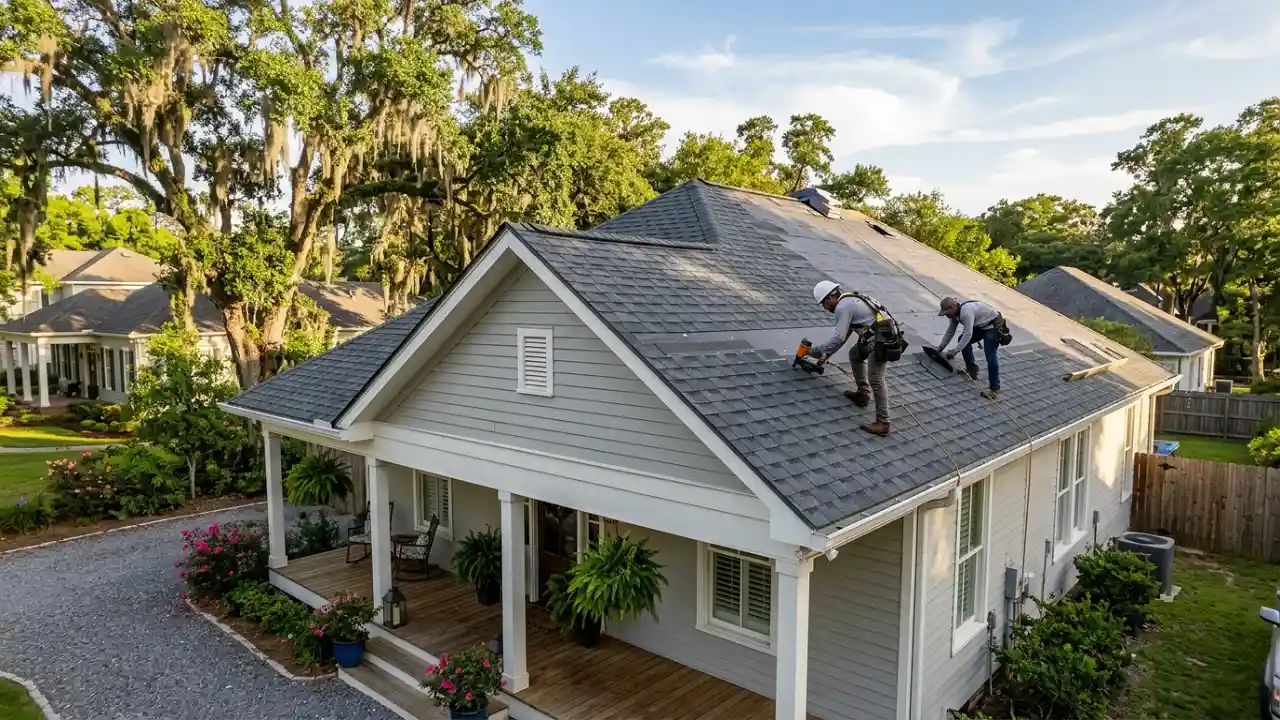
An ice and water shield roof refers to a specialized waterproof membrane installed under roofing materials to protect vulnerable areas from water damage caused by ice dams and wind-driven rain. Imagine it as a tough, rubberized tape that sticks directly to the roof deck, creating a watertight barrier.
This shield is commonly applied along roof edges, valleys where two roof slopes join, and around roof penetrations like chimneys, vents, and skylights—locations prone to leaks because water or ice tends to accumulate there.
How Does an Ice and Water Shield Work?
The ice and water shield is a fully adhered underlayment made primarily of rubberized asphalt or synthetic materials with a sticky backing. Once its release paper is removed, it bonds directly to the roof deck. This adhesion ensures it won’t shift or blow away during storms and seals tightly around nails or fasteners, preventing leaks where shingles or other roofing materials are pierced.
Its self-healing property means if the shield is punctured by a roofing nail during installation, it still seals around that spot, maintaining a continuous waterproof barrier.
Why Is It Critical for Roof Protection?
1. Prevention of Ice Dams
In colder climates, heat escaping through a roof melts snow on the surface, which then refreezes at roof eaves creating ice dams. These dams stop proper drainage, causing water to back up under shingles and leak into the home. The ice and water shield blocks this moisture from penetrating the roof structure, protecting your home’s interior.
2. Seamless Seal Around Penetrations
Areas where pipes, chimneys, skylights, and vents puncture the roof are natural weak points. The shield covers and seals these penetrations, eliminating pathways for wind-driven rain or melting snow to enter.
3. Protection of Roof Valleys and Edges
Roofs have valleys where two slopes meet, channeling large amounts of water. The shield reinforces these spots, preventing leaks caused by heavy rain or pooling water.
Where Is the Ice and Water Shield Installed?
Proper installation focuses on:
-
Eaves: The lowest roof edges where ice dams typically form.
-
Valleys: High water flow areas during storms.
-
Around Roof Penetrations: To prevent leaks at chimneys, skylights, vents.
-
Roof-to-Wall Junctions: Transitions between roof planes and vertical walls.
Benefits of Using Ice and Water Shield Roofing
-
Superior Leak Protection: Offers a second line of defense beneath shingles.
-
Durability: Resistant to temperature fluctuations and weather damage.
-
Self-Adhesion: Bonds directly to the roof deck, preventing uplift or shifting.
-
Versatility: Compatible with various roofing materials including asphalt shingles, metal, cedar shakes, and tiles.
-
Cost-Effective in Long Term: Prevents costly water damage repairs by enhancing roof integrity.
Does Every Roof Need an Ice and Water Shield?
While highly recommended for homes in cold or wet climates, especially where ice dams are common, it is also wise to install an ice and water shield:
-
In regions with heavy snowfall or frequent rain
-
On roofs with low slope where water drainage is slower
-
On complex roof designs with many penetrations and valleys
Many modern building codes and roofing manufacturers require or strongly recommend ice and water shield installation to qualify for warranties.
Installation and Best Practices
-
The shield is applied directly to a clean, dry roof deck before the main roof covering.
-
Overlapping rows ensure no gaps where water can ingress.
-
Roofers carefully seal around nails and fasteners due to the shield’s self-sealing characteristic.
-
Attention to manufacturer instructions guarantees maximum effectiveness.
Maintenance and Longevity
Ice and water shields, once installed under a quality roof, require no separate maintenance. Their durability allows them to last as long as the roof itself. However, regular roof inspections help identify any potential issues before water damage occurs.
Summary
An ice and water shield roof is a critical investment for strengthening your roof’s defense against ice dams, leaks, and water damage. By acting as a waterproof barrier adhered firmly to the roof deck and sealing around vulnerable points, it dramatically increases your roof’s lifespan and protects your home’s interior.
Integrating this shield into your roofing system is an essential step for peace of mind—especially in climates prone to harsh winters and heavy rains.