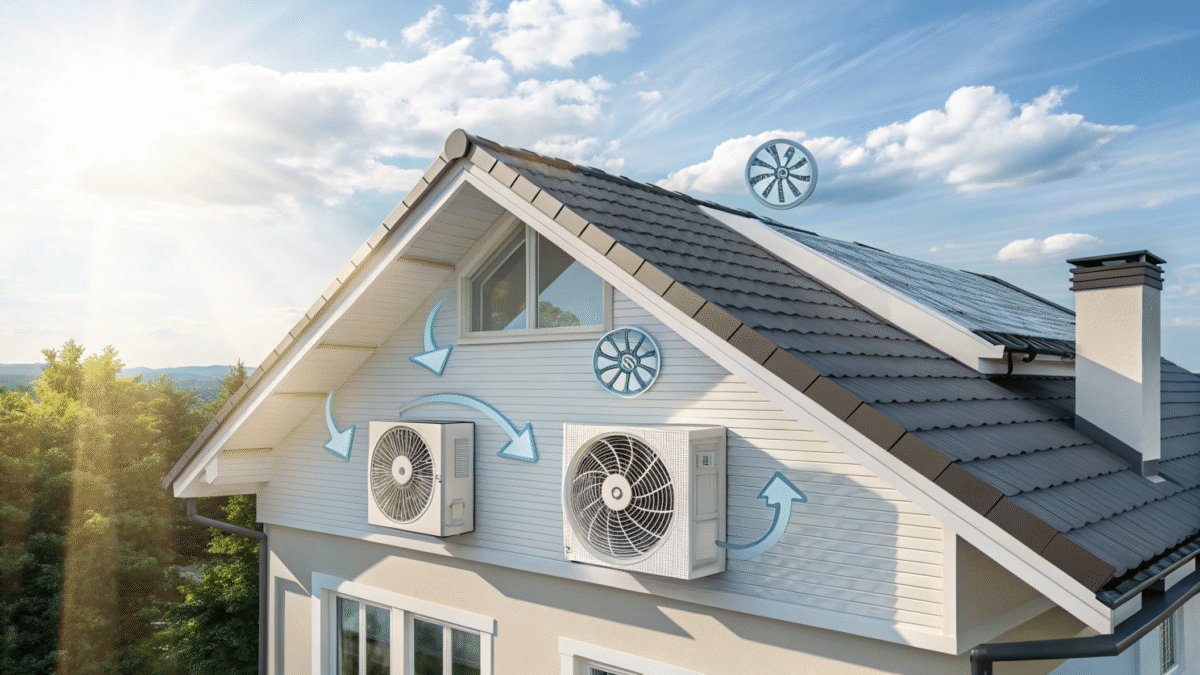
Attic fan types play a crucial role in maintaining a healthy, energy-efficient home by improving ventilation and reducing heat buildup in the attic. With several options available, choosing the right attic fan can make a significant difference in comfort and energy savings. This comprehensive guide covers the main types of attic fans, their features, benefits, and how to select the best one for your needs.
What Are Attic Fans?
Attic fans are ventilation devices designed to remove hot air from the attic space, helping to regulate temperature and prevent moisture buildup. By circulating air, attic fans reduce the strain on your HVAC system, lower energy bills, and extend the life of your roof and insulation.
Types of Attic Fans
Roof-Mounted Attic Fans
Roof-mounted attic fans are installed near the peak of the roof, allowing them to draw hot air out of the attic efficiently. These fans are constructed from weather-resistant materials to withstand outdoor conditions and are designed to integrate seamlessly with roofing materials to prevent leaks.
-
Pros: High airflow rates, effective for large attics, durable construction.
-
Cons: More visible than other types, may require professional installation.
Roof-mounted fans are ideal for homes in hot climates where proactive cooling is essential.
Gable-Mounted Attic Fans
Gable-mounted attic fans are installed on the gable walls of the attic, making them a versatile option for homes with difficult roof access. Installation is less invasive, as it does not require cutting holes in the roof, which helps maintain roof integrity.
-
Pros: Easy installation, suitable for homes with short attics, works well with passive ventilation systems.
-
Cons: May not provide as much airflow as roof-mounted fans.
Gable-mounted fans are a great choice for homeowners who want to avoid major roof modifications.
Powered Attic Fans
Powered attic fans use electricity to actively exhaust hot air from the attic. These fans can be roof-mounted or gable-mounted and are available in various sizes and CFM (cubic feet per minute) ratings to suit different attic sizes.
-
Pros: High airflow, customizable with thermostats and humidistats, can be controlled remotely.
-
Cons: Higher energy consumption, may require professional installation.
Powered attic fans are suitable for homes that need consistent and powerful ventilation.
Solar Attic Fans
Solar Attic Fan Types are powered by solar panels, making them an eco-friendly option. These fans operate during daylight hours, reducing reliance on electricity and lowering energy bills.
-
Pros: Energy-efficient, environmentally friendly, low operating costs.
-
Cons: Dependent on sunlight, may not operate during cloudy days or at night.
Solar attic fans are ideal for homeowners looking to reduce their carbon footprint and energy costs.
Wind-Driven Attic Fans
Wind-driven attic fans, also known as turbine vents, use wind power to rotate and exhaust hot air from the attic. These fans are passive and require no electricity.
-
Pros: No energy costs, simple design, low maintenance.
-
Cons: Dependent on wind, less effective in calm weather.
Wind-driven fans are a cost-effective solution for homes in windy areas.
Passive Attic Vents
Passive attic vents, such as ridge vents and soffit vents, rely on natural airflow to ventilate the attic. These vents operate without electricity, and people often use them in conjunction with powered fans.
-
Pros: No energy costs, low maintenance, effective when combined with other ventilation methods.
-
Cons: Less effective in stagnant air conditions.
Passive vents are a fundamental part of any attic ventilation system.
Choosing the Right Attic Fan
When selecting an attic fan, consider the following factors:
-
Attic Size: Larger attics require fans with higher CFM ratings.
-
Climate: Homes in hot climates benefit from powered or solar fans, while those in windy areas may prefer wind-driven fans.
-
Installation: Roof-mounted fans may require professional installation, while gable-mounted fans are easier to install.
-
Energy Efficiency: Solar and passive fans are more energy-efficient, while powered fans offer higher airflow.
Benefits of Attic Fan Types
-
Improved Air Quality: Attic fans help remove stale air and moisture, reducing the risk of mold and mildew.
-
Energy Savings: By reducing heat buildup, attic fans lower the workload on HVAC systems, leading to lower energy bills.
-
Extended Roof Life: Proper ventilation prevents excessive heat and moisture, which can damage roofing materials.
Conclusion
Understanding the different types of attic fans and their benefits is essential for maintaining a comfortable and energy-efficient home. Whether you choose a roof-mounted, gable-mounted, powered, solar, wind-driven, or passive attic fan, each type offers unique advantages. By selecting the right attic fan for your home, you can enjoy improved air quality, energy savings, and a longer-lasting roof.