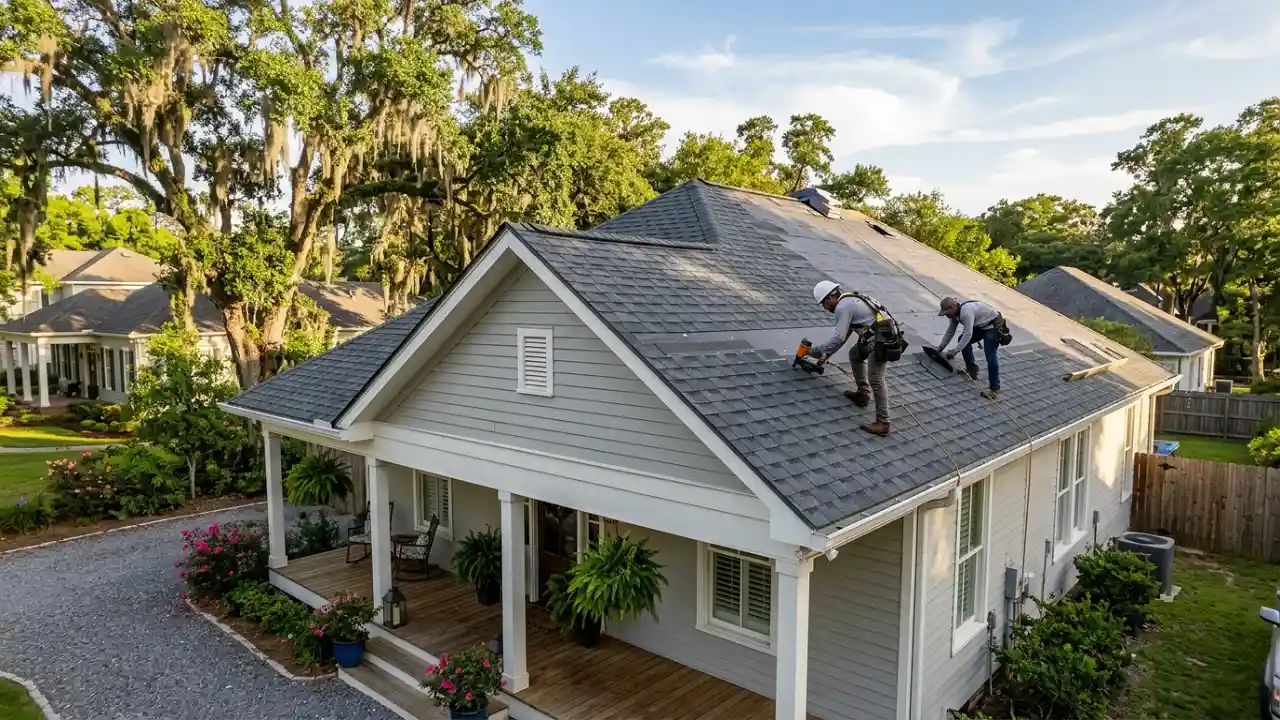
Vinyl siding is standard among many homes and is often seen as an economical option during new construction and home renovations. Updated models feature technology to improve overall energy efficiency and even reduce monthly energy bills.
Updated models feature an energy-efficient foam core and state-of-the-art protective coatings. These help to efficiently trap warm air during the winter months and block warm air from entering during the summer months. Paired with an energy-efficient roof, vinyl siding creates an energy-efficient barrier for the home.
What is Insulated Vinyl Siding?
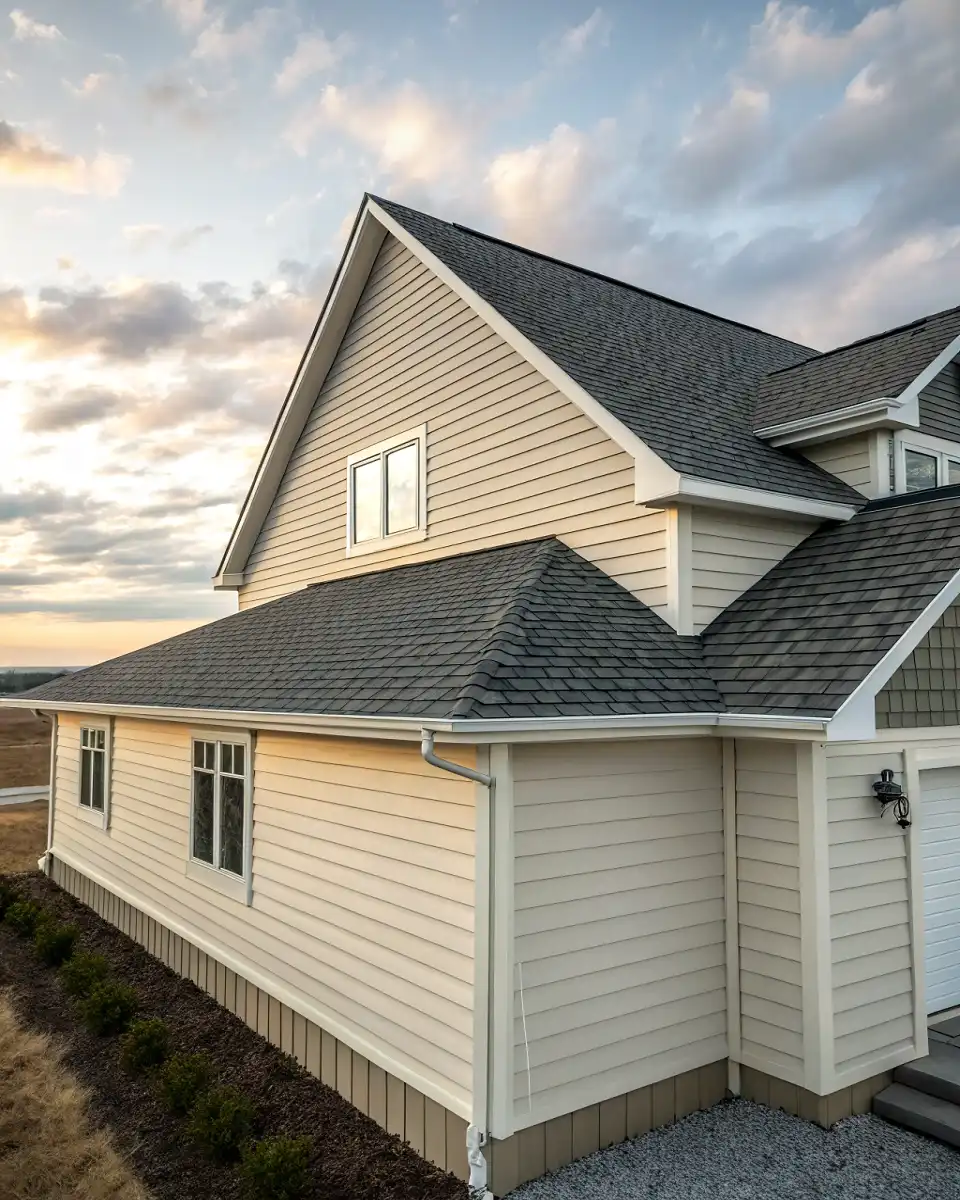
Insulated vinyl siding is made from panels of vinyl that have foam (typically expanded polystyrene (EPS)) bonded to them. This foam backing fits very tightly against the home’s frame, so that it can’t be removed.
This feature gives Insulated Vinyl siding a unique component that sets it apart from traditional siding.
Insulated Vinyl siding provides the unique benefit of giving a full thermal barrier, which makes it different from traditional siding, which leaves air gaps that are susceptible to minor temperature fluctuations.
This leads to an overall better temperature control and insulation. The siding also has a great R-value, typically ranging from 2.0 to 3.5.
How Insulated Vinyl Siding Boosts Insulation
Regardless of the temperature outside, Insulated Vinyl siding works by prevent heat transfer from and to the home. The foam backing creates air pockets that move drastically resist an interior temperatures from flowing to the outer exterior.
Quarter to half a degree interior temperature differences can be felt during month of extreme heat. During the winter temperatures, it can help the home retain heat. Insulated vinyl siding makes a great energy-efficient option.
This also results in great energy savings, with studies showing an approximate 2-5% reduction in heating and cooling costs. This is approximately $14-$80. annually per home, depending on climate.
The durability of foam increases as it better withstands dents from hail or impacts as opposed to thin vinyl.
Roof-Siding Collaboration for Enhanced Efficiency
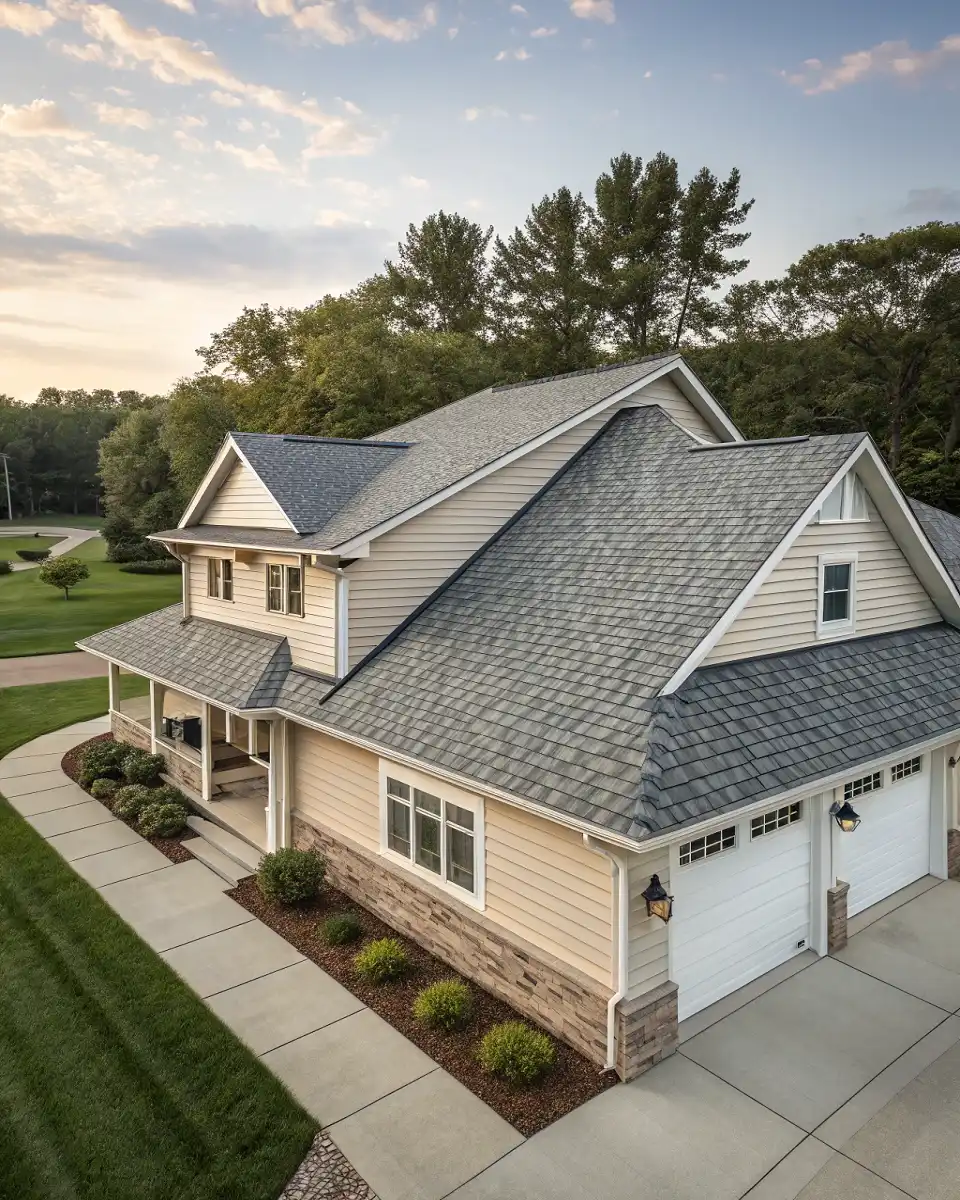
The roof and insulated vinyl siding create a thermal envelope around the home. The Roofs contain the overhead insulation while the siding takes care of the verticals.
This minimizes thermal bridging, which is the escape of heat via studs or gaps, through insulation, reflects gaps.
Installing the J-channel flashing over the rooflines and leaving a half inch of clearance from the roofing material solves the moisture problem. This synergy at the interface increases the overall R-value and decreases the HVAC reliance.
For Gambrel roofs that have steep lower slopes, insulated vinyl siding panels are easily cut to match the angle with a simple pattern template.
Regular Roof Inspections help identify issues like damage early to ensure the combo performs at peak.
What are the Benefits of This Combination?
- Anticipate lower utility costs due to the increased R-value and better airtight seal between roof and walls.
- More insulation means a better shield from the noise.
- More durability: The system is settled to wind resistance of 150 mph with the 2025 interlocking system.
- More attractiveness: No worries with maintenance and painting, it looks like real wood or other materials.
Insulated vs. Traditional Vinyl Siding
| Feature | Insulated Vinyl Siding | Traditional Vinyl Siding |
| R-Value | 2.0-3.5 per inch | Near 0, relies on wall cavity |
| Energy Savings | 2-5% on bills | Minimal added insulation |
| Impact Resistance | High, foam absorbs blows | Low, dents easily |
| Cost (per sq ft) | $5-8 installed | $3-6 installed |
| Installation Weight | Heavier, needs stronger fasteners | Lighter, simpler |
Without a doubt, a reason why insulated versions excel in efficiency and longevity in roof applications will be the given.
Installation Tips Around the Roof
Before putting the final course of siding, ensure that there is a solid roof edge using the soffit accessory. At roof junctions, especially on complex shapes, overlap J-channel to facilitate water runoff.
Nails for roofing that have heads wide enough to fully penetrate the sheathing, yet allow for movement of the panels. For Roof Damage, caused by storms, replace the affected siding sections seamlessly to avoid compromising the integrity of the insulation.
On uneven walls, professionals suggest furring strips to provide a flat foam contact, maximizing the seal between the siding and the roof. For the 2025 builds, be sure to check local codes regarding wind-rated fasteners.
2025 Updates and Innovations
Among the trends in siding for the year 2025 is the use of eco-friendly blends of PVC and bio-based siding that reduces the amount of chlorine used.
For proactive alerts on Roof Work, Smart systems that contain moisture sensors work well with roof technology.
New technology that enhances fire prevention and double fade protection with color-lock nanotech will be ideal for roofs in direct sun exposure.
Dirt-repellent surfaces that self-clean will extend the life of the siding without the need for added maintenance, and even enhance the insulated vinyl siding for whole-home insulation, in accordance with energy codes.

Maintenance For Long-Term Performance
Avoid Chemical Damage. You may also want to consider cleaning your panels once a year with a mild soap, followed by a rinse with plain water. During your regular checks, inspect the roof-siding junctions, especially the edges for cracking. Seal any gaps as soon as you find them.
Avoid scratches. Hail prone areas tend to foam. Note Roof Damage for your insurance.
Cost and Return on Investment
Keeping Initial costs run higher at $5-8. 5-10 years Payback. Average energy cut 3%. Efficient upgrades may qualify for tax credits. See IRS.
Proven efficiencies increase resale value and attracts ecologically minded buyers. Combining with roof insulation adds to savings in variable climates.
Insulated vinyl siding pairs up with your roof to provide lasting, low-maintenance insulation that pays off over time. Durable, innovative materials give homeowners steady comfort and savings.
For More Roof Repair and Maintenance Visit Classic Roofing Restoration Page