
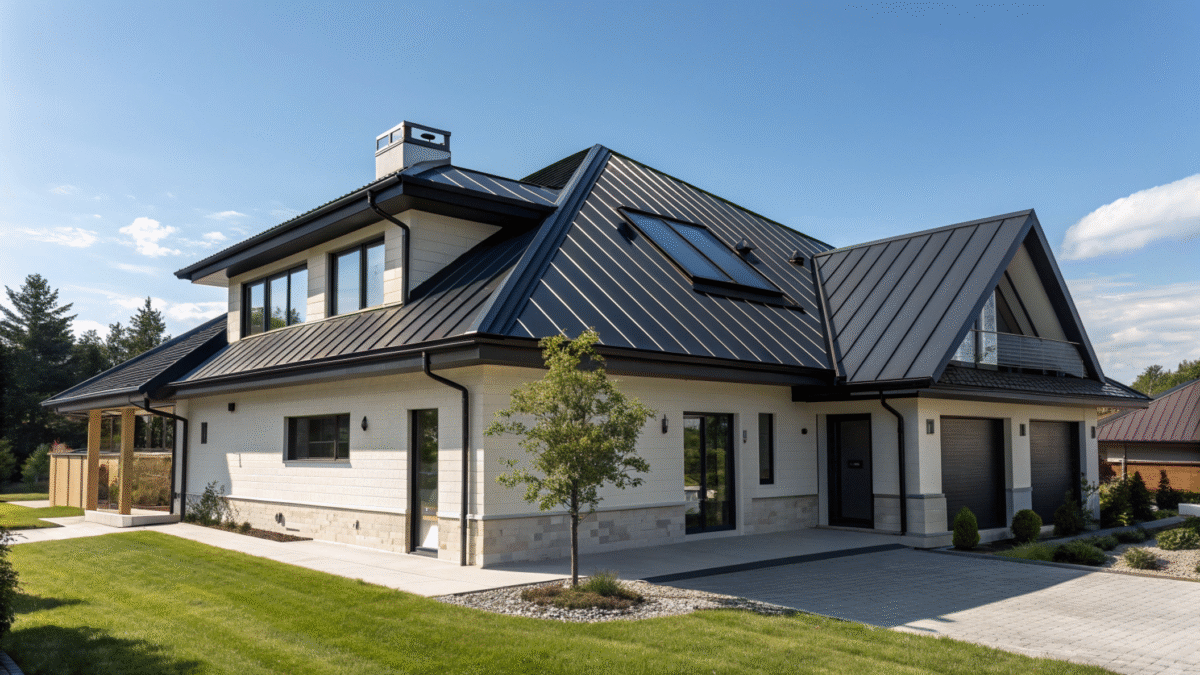
A Black metal roof has become increasingly popular among homeowners and builders due to its modern aesthetic, durability, and energy efficiency. Whether you’re planning new construction or a reroofing project, understanding the benefits, installation process, costs, and maintenance of black metal roofs can help you make an informed decision. This blog provides a comprehensive guide for anyone considering a black metal roof in 2025.
What is a Black Metal Roof?
A black metal roof typically consists of steel or aluminum panels coated with a durable black finish. This color not only offers striking curb appeal but also provides benefits such as heat absorption in colder climates and compatibility with various architectural styles. Black metal roofing can come in several panel styles, including standing seam, corrugated, and metal shingles, each giving a distinct look and installation technique.
Benefits of Black Metal Roofs
-
Durability and Longevity: Metal roofs can last 40-70 years, resisting extreme weather conditions like wind, hail, and heavy rain without significant damage or degradation.
-
Energy Efficiency: In cooler climates, black metal efficiently absorbs heat, reducing heating costs. Modern coatings also reflect infrared light to keep homes cooler during summer.
-
Low Maintenance: Compared to asphalt shingles, metal roofs require less frequent repair and cleaning, making them a cost-effective long-term choice.
-
Fire Resistance: Metal is non-combustible, helping protect homes from wildfires or accidental fires.
-
Aesthetic Appeal: Black metal roofing provides a sleek, contemporary look that enhances home styles ranging from traditional to modern.
-
Environmentally Friendly: Metal roofs are often made from recycled materials and can be fully recycled at end of life, reducing environmental impact.
Installation Process for Black Metal Roofs
Installing a black metal roof involves several critical steps to ensure performance and longevity:
-
Roof Assessment and Planning: Inspect the current roof deck for damage or rot. Accurate measurements are essential for ordering the correct number of panels. Selecting the panel style and underlayment material is part of this phase.
-
Old Roof Removal: While some metal roofs allow installation over shingles, a full tear-off is recommended to prevent moisture buildup and prolong roof life.
-
Preparation of the Roof Deck: The surface should be clean, flat, and free of debris. Repairs to underlying structures are made at this stage.
-
Underlayment Installation: A waterproof underlayment or synthetic felt is applied to prevent water infiltration.
-
Flashing and Trim: Install metal flashing around roof penetrations (vents, chimneys) and drip edges to direct water away from the roof assembly.
-
Panel Installation: Panels are aligned and attached from the eaves upward, using screws or hidden fasteners depending on the system. Proper panel overlap ensures watertight sealing.
-
Finishing Touches: Ridge caps, closure strips, and sealants complete the installation, protecting edges and joints.
Proper installation requires specific tools such as metal shears, fastener drivers, and careful measurements to avoid issues like warping or leaks.
Cost Considerations for Black Metal Roofs
While metal roofing has a higher upfront cost than asphalt shingles, its durability and low maintenance offer long-term value. In 2025, average pricing ranges from $7 to $12 per square foot, including materials and professional installation. Factors affecting cost include:
-
Quality and type of metal (steel vs. aluminum)
-
Panel style and thickness
-
Roof complexity and pitch
-
Local labor rates
-
Underlayment and accessory choices
Homeowners often view metal roofing as an investment that increases property value and reduces future expenses related to roof repairs and energy use.
Maintenance Tips for Longevity
To maintain your black metal roof’s appearance and function:
-
Inspect at least twice a year and after storms for damage or loose panels.
-
Clear debris and leaves to prevent moisture retention.
-
Check and replace sealants around fasteners and flashing as needed.
-
Avoid walking on the roof when possible; use walk pads if access is necessary.
-
Schedule professional inspections every few years to catch potential issues early.
Is a Black Metal Roof Right for You?
Black metal roofing suits homeowners looking for a stylish, durable, and long-lasting roofing solution. It works well in diverse climates, particularly in areas where winter heating efficiency is a concern. Architects appreciate its sleek aesthetics and versatility with many home designs.
While the installation cost can be a barrier, its benefits in longevity, low maintenance, and energy savings often justify the investment. Selecting a reputable installer and quality materials is key to ensuring your black metal roof performs well for decades to come.
In conclusion, black metal roofs offer an excellent combination of durability, design appeal, and energy efficiency, making them a top choice for modern homeowners in 2025. This guide covers everything from benefits and installation steps to maintenance and costs, providing essential insights for anyone considering this roofing option.


