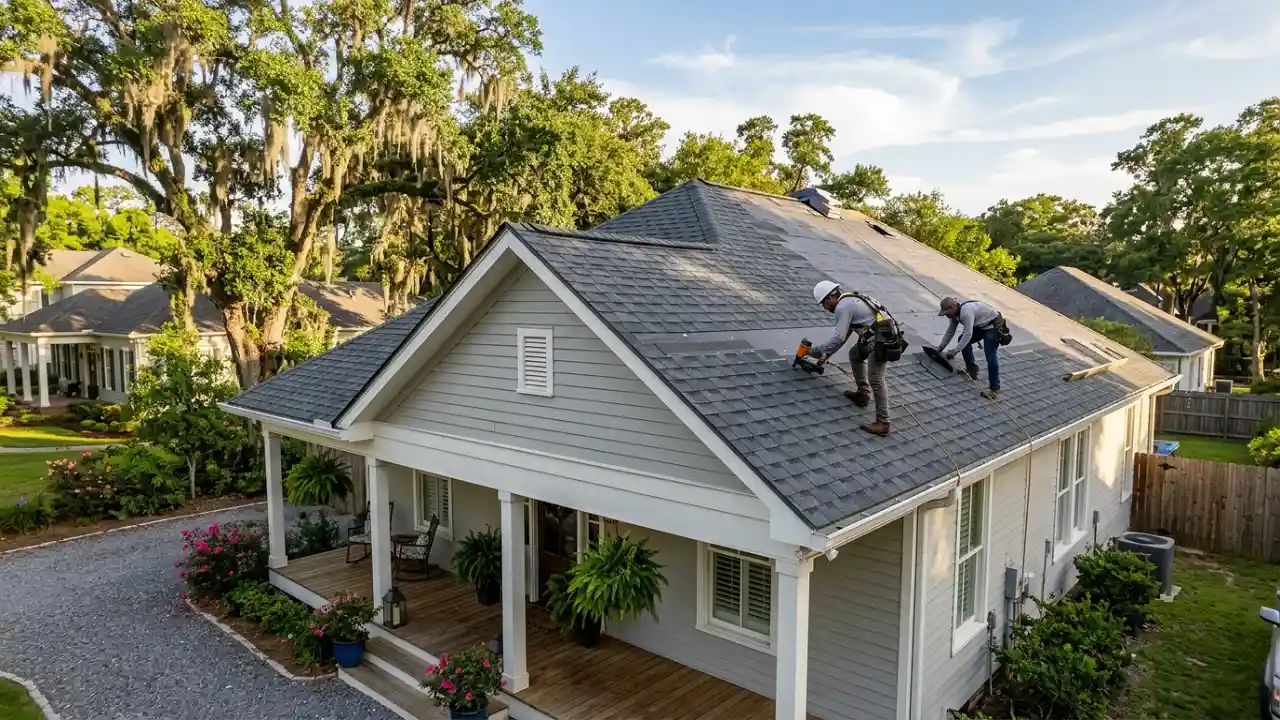
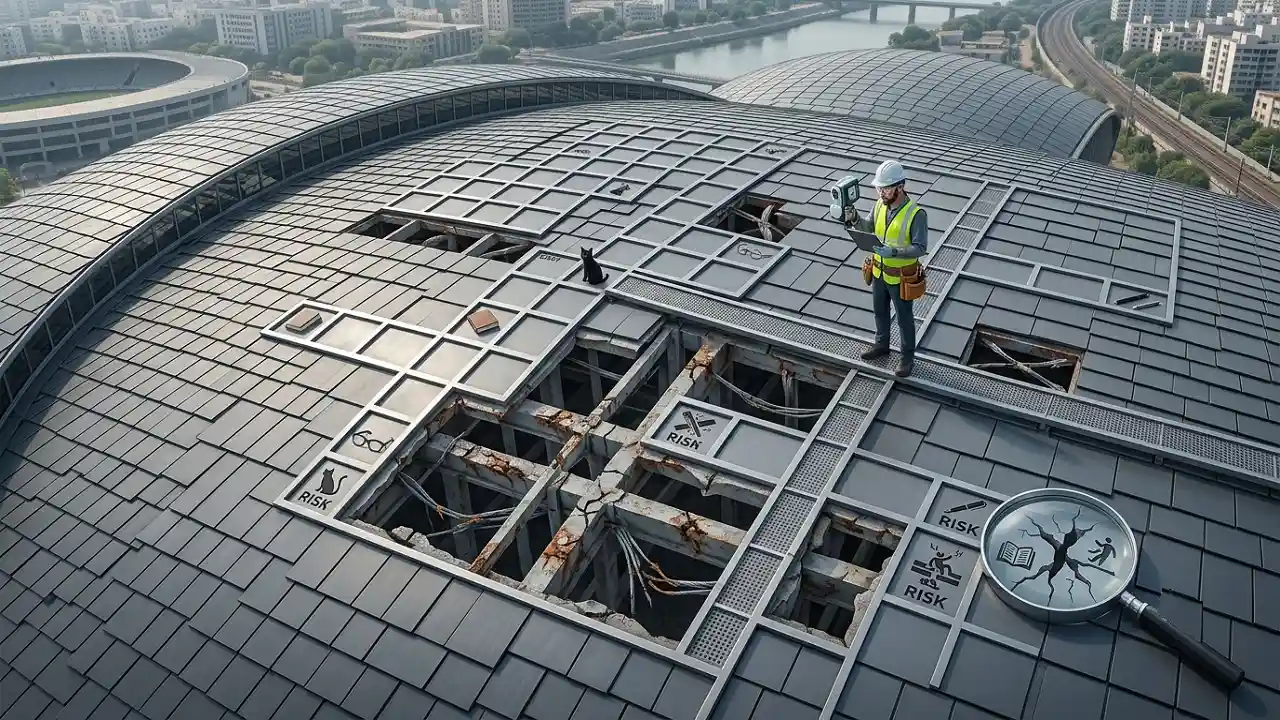
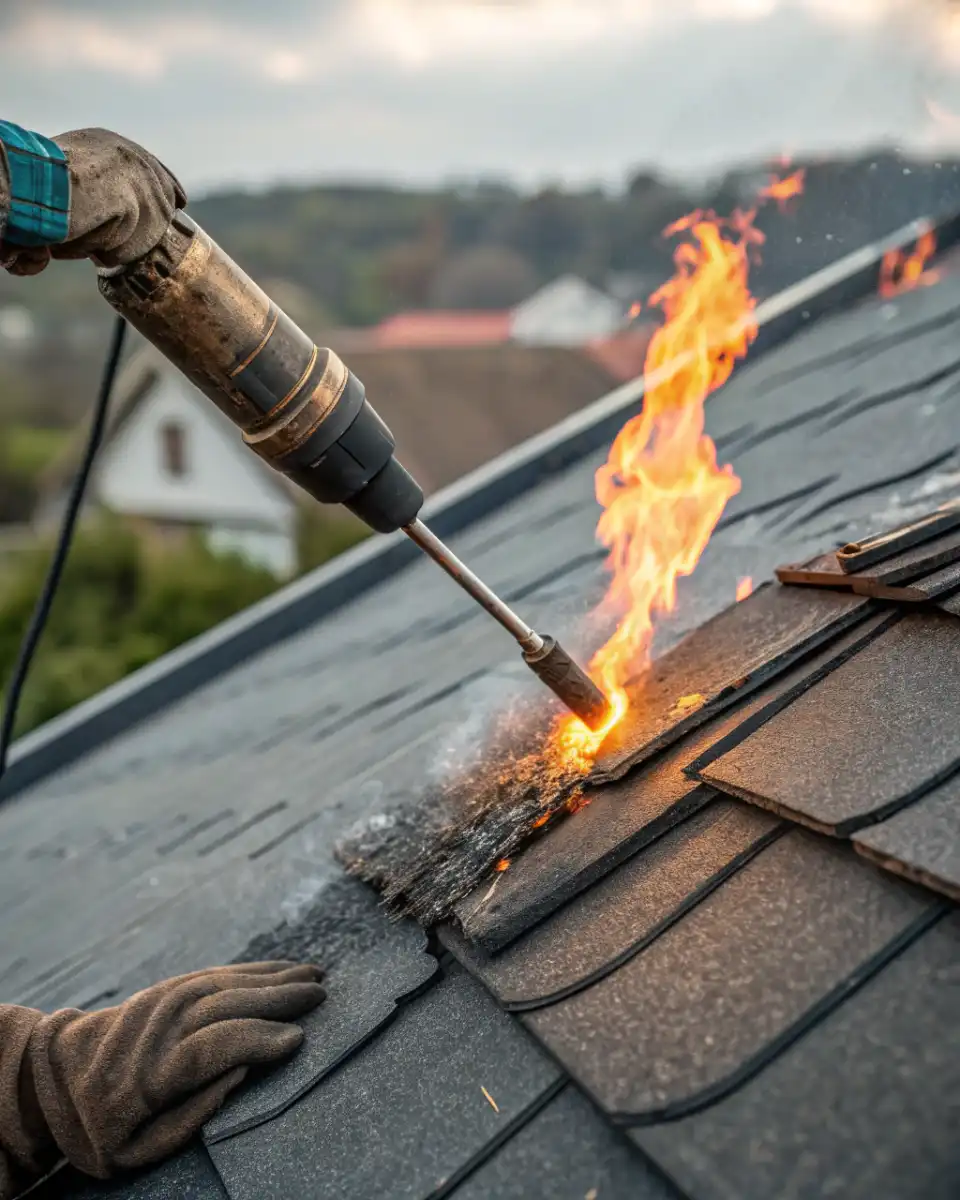
A flat or low-slope roof system made of modified bitumen and bonded with heat is referred to as torch down roofing. Using a propane torch, the heat melts the roof’s membrane bottom and attaches it to the roof’s substrate creating a seamless, waterproof membrane.
In 2025, torch down roofing is still in high demand as it exhibits a mixture of flexibility, UV resistance, and excellent waterproofing, with the added, positive trait of good fire resistance provided that the roofing system is properly designed and detailed.
It’s also widely used on extensions, garages, small commercial buildings, and any roofing systems susceptible to standing water and leaks.
What torch down roofing is?
Torch down roofing consists of modified bitumen, a rubber asphalt that is blended with polymers to increase flex and ductility. The membrane is rolled, and as the installer unrolls it, they heat it with a torch so that it adheres to the thermoplastic layer.
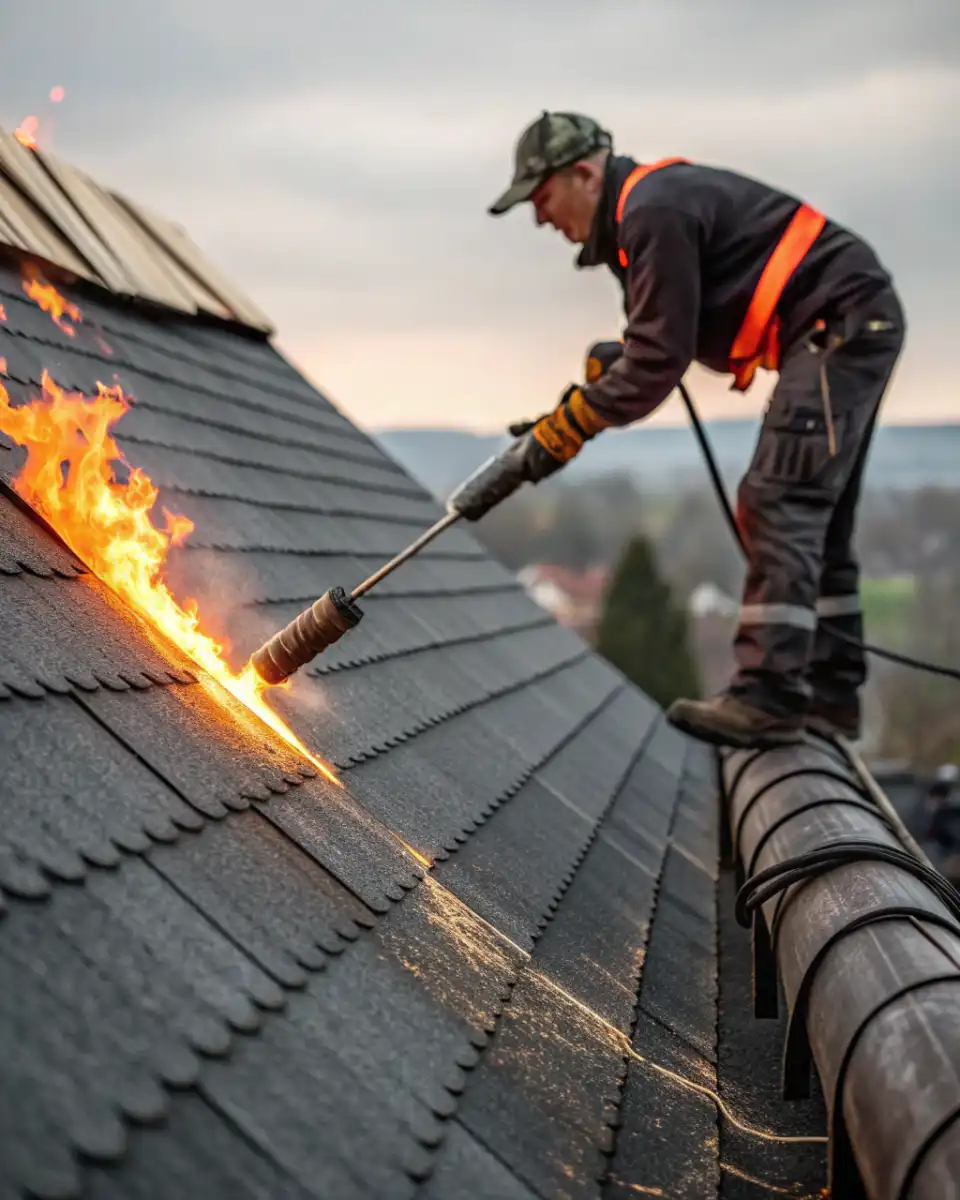
Two primary polymer types are APP (Atactic Polypropylene), a plastic that improves UV resistance and high temp performance, and SBS (Styrene Butadiene Styrene), a rubber that improves flexibility in colder temperatures.
To create a custom multi layer roof system designed for a specific building with a particular climate, both APP rubber and SBS can be used.
Main advantages of flat roof systems
Because it is more able to sustain standing water and thermal movement as well as more extreme weather than many other traditional roofing systems, torch down roofing is very popular in the construction of flat roof paint, particularly for commercial buildings.
The seams are continuous and welded shut which prevents water from sneaking through weak spots.
Some additional benefits are just how well it does against UV radiation, how fire safe it is with to correct cap sheet, and how easy it is to inspect and clean thanks to a smooth surface.
The system’s additional service life and performance is complemented by the ability to perform local repairs by re-heating and patching the damaged areas.
Updates and Trends 2024-2025
Guidance for 2024-2025 has shifted the focus to fire safety during installation, particularly over combustible decks such as wood sheathing and other combustible decks.
Certain specifications have forbidden direct torching over these substrates and alternative techniques such as self-adhering base sheets and ‘torch-and-flop’ are now required. These approaches mitigate the fire risk of the installation.
Updated environmental product declarations and life cycle based standards for SBS torch applied membranes prioritize the more cool or reflective cap sheets whenever possible. To address energy efficiency in hot climates, manufacturers have also improved formulations to produce lower concentrations of building fume.
Comparing Torch Down to Other Flat Roof Systems
Compared to traditional built up roofs (BUR), torch down roofing is typically more quick to install and has less complexity in the layers of the roofing system.
There is less loose gravel to manage and hot mopped asphalt is also less required. Uniform thickness is better at resisting a flex, which is beneficial in avoiding the cracking a roof is prone to as it shifts.
Compared to some single ply membranes, torch down roofing performs better with surface imperfections and is better for foot traffic. On the other hand, installation of torch down roofs is more demanding in terms of roofing skills and installation safety.
The decision is usually determined by the climate, the experience of the contractors, and if an open flame is acceptable on the site.
Torch down roofing contractors
- Torch down roofing comes in different types, including 2-layer and 3-layer systems. In a 2-layer system, there is a base sheet and a cap sheet. In a 3-layer system, there is an additional interply layer in the middle for better protection.
- Cap sheets can either be smooth or granulated and the granulated ones have better UV resistance and a better fire rating. Some cap sheet granules even come in different reflective and lighter colors to help with the heat build-up on the roof.
- To have a leak-proof torch down roof system, there must be a good, well-prepared substrate, like a concrete or combustible deck as well as a compatible roof board. It is important to fix or remove any damaged sections, old blisters, or loose materials before new layers are placed.
- The roof underlayment or base layer is then put, to enhance adhesion and to be an additional barrier to moisture. Above this layer, the torch-applied base and cap sheets make the waterproofing membrane which protects the flat roof.
The installation process primarily involves cleaning the surface and then placing edge metals, drains, and key flashings and the rest of the system.
roofing contractors
Workers then unroll the flooring, get it in place, and then heat the bottom with a torch in several places while keeping it in the right position so it gets glued down nice and orderly.
- After finishing the base layer, the cap layer goes on top with staggered seams in order to not create a straight line of weakness, and once again the torch is used to fuse overlapping and tightly welding them together. Lastly, the seams of flashing on the tops of walls, pipe and vent openings, and outside corner pieces are done neatly, because these pieces are the most common places to get leaks.
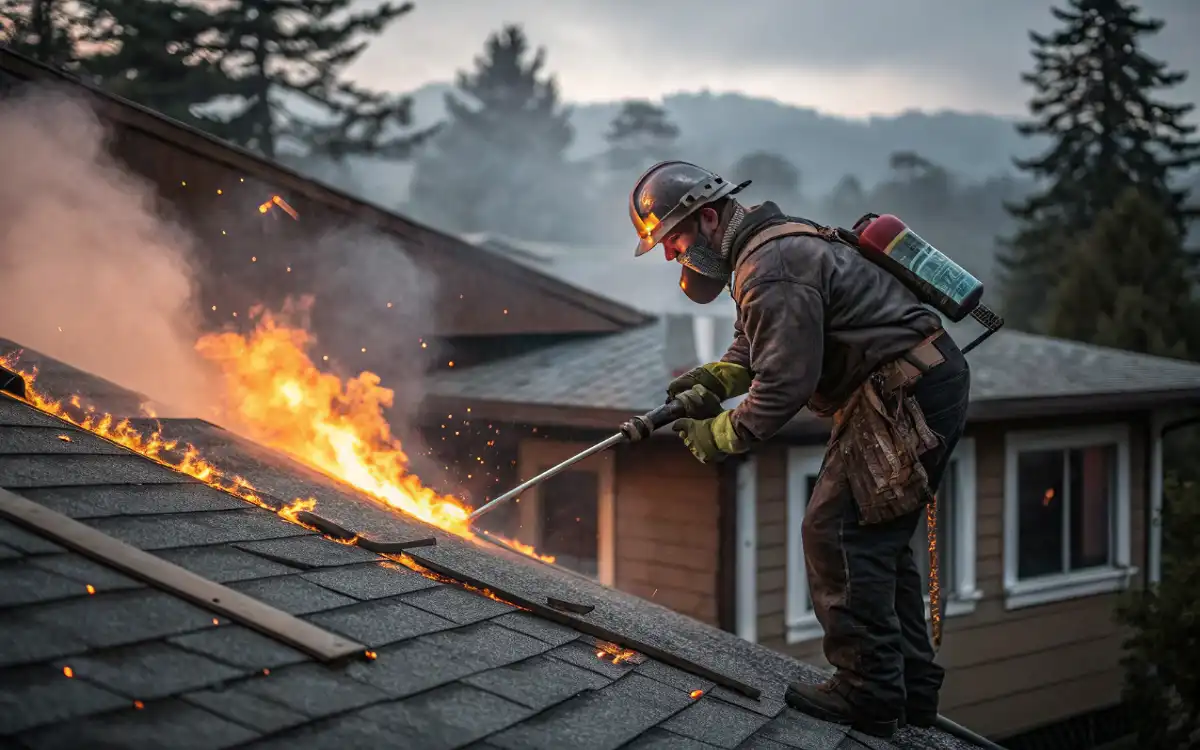
- Fire Safety and Best Practice Fire safety is a concern with an open flame, so the modern industry standards torch down roofing has is very focused on torch down roofing safety. Guidelines emphasize the need of a documented fire safety plan, adequate training, and controlled burning of the torch within the proximity of wood blocking and other combustible items like siding.
- The recommended approach is to use non- combustible protective layers or materials that are cold- applied around transitions and openings where direct torching would be problematic. Many other specifications require on-site fire watch and continued observation of the area where work has been performed to identify and stop any hidden burning.
Energy Efficiency and Cool Roof Options
Torch down roofing works ideally with lighter colored or reflective cap sheets. Sofa materials absorb less heat and stay reflect a lot of sunlight, so organ cap sheets help bring down overall interior temperature on consistently hot days.
In certain locations, it is mandatory to place a cool roof on low-slope roofs as a per the building code or eco-friendly modernized building programs.
Fewer cooling loads, longer lifespan on membranes, less thermal stress, and better comfort on upper floors.
How long will it last? Look at lifespan, durability, and how much it will need ongoing maintenance.
An installed torch down roof will last on average, about 15-20 years, based on some factors like climate, exposure to UV, and maintenance. Well-performing multi-layered systems, like high-quality cap sheets, will last longer.
To avoid leaks, small problems will need to be addressed at regular inspections. Taking on basic maintenance tasks like removing debris and checking to see drains are clear will be super helpful. It will some time, but it will extend the lifespan of the roof.
Common problems for Flat Roofs?
Flat roofs are especially vulnerable to thermal movement. UV damage, and ponding water. Flat roofs are. Torch down helps with thermal movement because it provides flexible membranes. It also seals the roofs with welded seams.
- Poor workmanship is still very, very bad. Like, not enough drainage, flashing, and the rest. Roofs will still have problems like leaks and blistering and Roof Failure. Pick a good contractor, especially for detailing on the edges with skylights… and just detailing, for long-term good results.
- To prevent leaks, maintenance tips goes like very heavy storms. Owners should inspect roofs for any punctures and materials that are in place.
- Minor torch down roofing damage such as small cuts or blisters should be repaired immediately. Patching materials and techniques used to torch roofing.
- Additionally, it is vital that unnecessary foot traffic and sharp. Items do not come in contact with the roof, and that walk pads are made available. Taking vegetation, leaves, and debris off the side of the roof helps. Drainage and lessens the chance of stagnant water which can stress roof seams over time.
- If the roof needs an update, some owners opt to paint or coat torch down roofing with an elastomeric coating. It adds a layer of protection over the roofing, making it more resistant to the sun’s ultra-violet rays. It can also improve the reflectivity of the roof, making it cooler than before, which is an added benefit since it is an expensive black membrane.
Roofing Which Torch Down Addresses
- With coatings, it is essential to not go with just any brand. The coating needs to be compatible with the modified bitumen, and the guidelines around coverage and curing made by the coating manufacturer also need to be followed. Usually, to get a non-peeling, abherative bonded, and continuous protective layer, multiple layers of the recommended thickness are needed.
- Despite the excellent waterproofness that torch down roofing has, there need in order to avoid moisture problems.
- Vents placed under the roof can help minimize moisture build-up. Moisture build-up can lead to unhealthy mould, insulation issues, or rotting wood.
To protect the roof membrane from unnecessary stress, drains, scuppers, and gutters help make sure water runoff doesn’t create deep pools. On roofs with shallow slopes, water moving towards the drains may require added tapering or crickets.
Cost Predictions/Estimates for 2025
The 2025 cost of torch down roofing is dependent on the roof size, membrane quality. The number of layers required, and the prevailing work regional wage.
Systems with two layers are generally on the less expensive side. While three-layer assemblies and more expensive cap sheets will be pricier but more lasting.
There’s the potential for added cost from upgrading insulation, removing existing roofing, and adding. The safety and fire code protection details added by modern legislation.
Owners should evaluate competing offers with the same focus on the detailed cost breakdown. The specified membrane, warranty, and system type over just the price per square foot.
When is torch down roofing the Best Option
The correct use of torch down roofing is mostly on low slope roofs. The ability to use flame heating, that are in need of serious leak protection. It’s the best option for small residential roofs and big commercial roofs where high quality, lasting waterproofing is needed.
For, complex situations, particularly if flame use is prohibited. It has limited access, self-adhered or cold applied systems should be used.
Talking about these limitations with a knowledgeable. contractor will assist in deciding if torch-down roofing will be appropriate for your roof work.
| Aspect | Details |
| System type | Multi-layer modified bitumen membrane installed with an open flame torch |
| Best roof pitch | Flat and low-slope roofs, typically from about 1/4:12 to 1:12 pitch |
| Typical lifespan | Around 15–20 years with proper installation and maintenance |
| Main materials | APP or SBS modified bitumen base and cap sheets, plus compatible roof underlayment |
| Key advantages | Strong waterproofing, welded seams, flexibility, good UV and fire performance with correct cap sheet |
| Main risks | Fire hazards during installation, workmanship errors, and poor drainage if not designed correctly |
| Ideal applications | Residential extensions, garages, commercial flat roofs, and industrial buildings needing leak-proof surfaces |
| Add-on enhancements | Reflective coatings, granulated cap sheets, and properly designed roof air vents and drainage components |
Summary Table:
Torch Down Roofing Overview Torch-down roofing is likely the most proven waterproofing solution for flat roofs in the year 2025. It offers a great balance of durability, flexibility, and waterproofing. It will provide a great balance of waterproofing and durability. Along with quality design and installation, along with regular upkeep. It will provide great long-term protection against significant damage due to rain, and weather.
Closing
Torch Down roofing wins the waterproofing flat roof competition for the 5th year straight. Projecting far into the future, we can predict the torch down roof. Products will continue to provide the same great waterproofing and durability balance. Along with regular updates, you can even provide a greater long-term protection against significant damage.
For More Roof Repair and Maintenance Visit Classic Roofing Restoration Page