EPDM roofing, short for Ethylene Propylene Diene Monomer, is a highly durable synthetic rubber roofing material widely used for flat, low-slope, and even some sloped roofs across commercial and residential buildings. Renowned for its excellent weather resistance, affordability, and energy efficiency, EPDM has become one of the top choices for building owners and contractors seeking a long-lasting roofing solution.
This article explores what EPDM roofing is, its key features and benefits, installation overview, and why it is an excellent choice for many roofing projects, helping you make an informed decision for your property.
What Is EPDM Roofing?
EPDM is a synthetic rubber membrane that originated in the automotive industry but has evolved into a premier roofing material since the 1960s. It is typically sold in large sheets that come in black or white, designed to cover entire roofs with minimal seams.
EPDM can stretch up to 300%, allowing it to adapt easily to building movements and temperature fluctuations without cracking or failing. Its flexibility also simplifies installation around complex features like corners, edges, and penetrations like vents.
Though more commonly used in commercial flat roofs, EPDM is gaining popularity in residential flat or low-pitched roof applications, delivering outstanding protection from weather extremes.
Key Benefits of EPDM Roofing
-
Exceptional Durability: EPDM roofs can last 30 to 50 years or more with proper maintenance. The material resists cracking, shrinking, and deterioration caused by sunlight (UV rays), ozone, or extreme temperatures ranging from freezing cold to over 300°F. It also withstands hail and heavy rain effectively.
-
Cost-Effective: Compared to other roofing types like TPO or PVC, EPDM is often less expensive in both materials and installation costs. Its longevity further translates into fewer repairs or replacements over time, offering excellent value.
-
Water and Weather Resistance: EPDM’s rubber membrane is highly water-resistant, protecting buildings from leaks and moisture damage. Additionally, it resists wear from winds, hail, snow, and UV exposure.
-
Energy Efficiency: White EPDM membranes reflect sunlight, reducing roof surface temperatures and cooling costs inside the building. Darker black membranes absorb heat but provide insulation benefits in colder climates.
-
Eco-Friendly and Recyclable: EPDM is a recyclable material, making it a more environmentally conscious roofing choice. It produces minimal waste during installation and can be recoated for extended lifespan.
-
Noise Reduction: The rubber structure can absorb external sounds such as rain or traffic noise, enhancing occupant comfort inside the building.
-
Low Maintenance: EPDM roofs require minimal upkeep. Periodic inspections and cleaning extend the roof’s life with minor effort.
Installation Overview
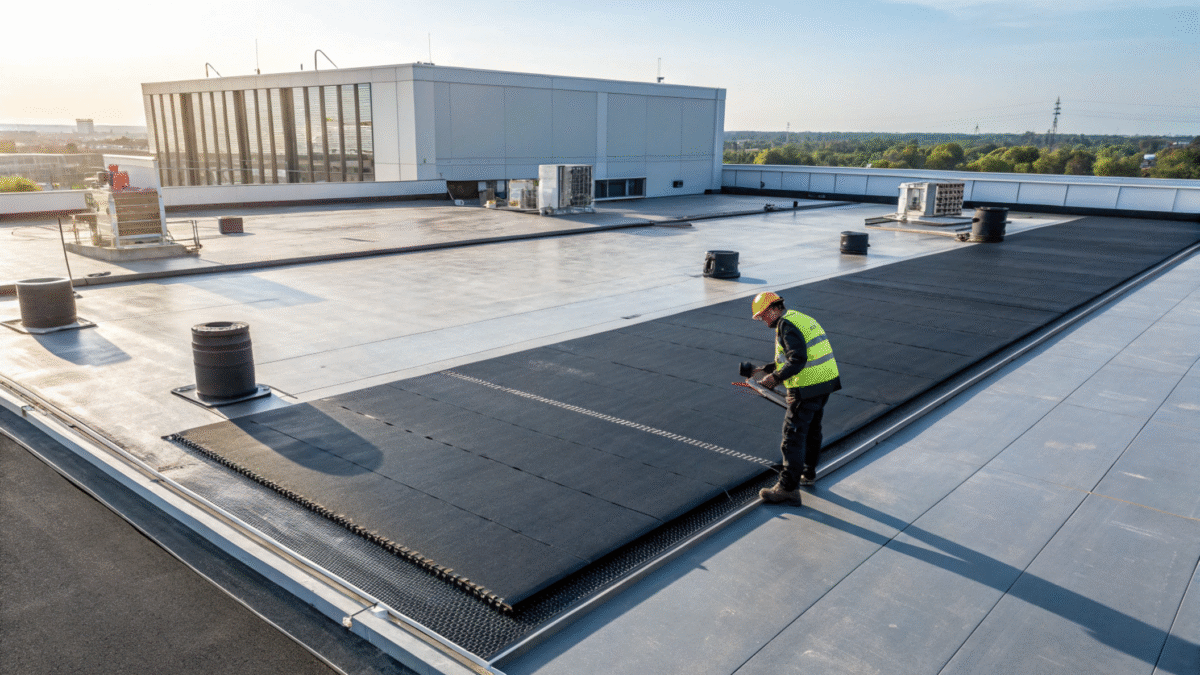
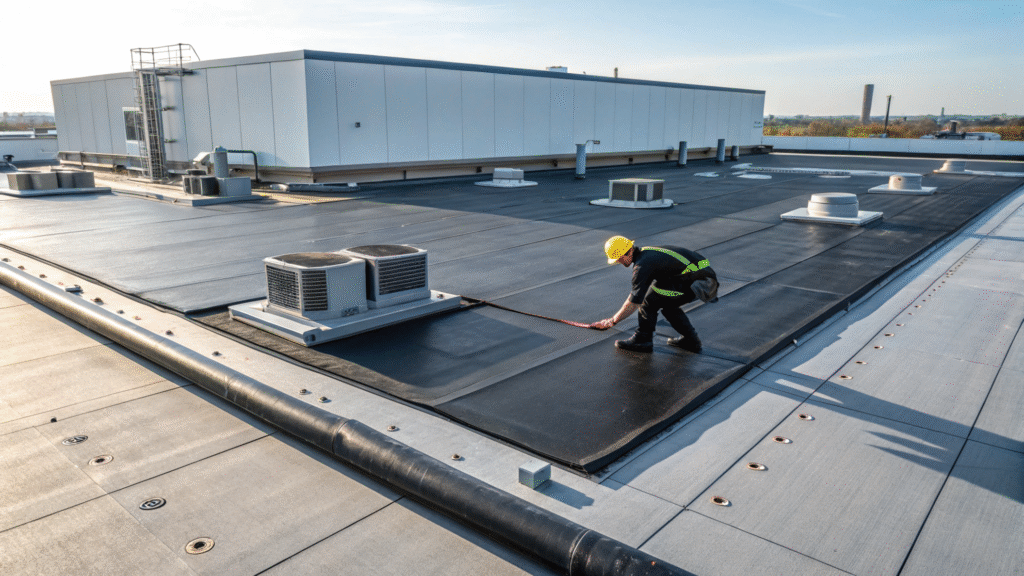
EPDM roofing is installed by rolling out large rubber sheets over the prepared roof deck. Depending on the building design and contractor preference, EPDM membranes can be fully adhered with adhesives, mechanically fastened using screws and plates, or ballasted with heavy materials like gravel to hold the membrane in place.
Flashing and sealants ensure waterproof seals around roof penetrations and edges. Because EPDM is flexible and seamless over large areas, it minimizes potential leak points compared to other roofing systems.
A professional roofing contractor experienced with EPDM installation can complete the process efficiently and ensure optimal roof performance.
Applications of EPDM Roofing
-
Commercial buildings with large flat or low-slope roofs like warehouses, offices, retail stores
-
Residential homes with flat roofs or architectural designs requiring durable waterproof membranes
-
Industrial facilities needing resilient, low-maintenance roofing
-
Institutional buildings such as schools, hospitals, and government structures
Its versatility and performance make EPDM suitable for varied sectors and roofing demands.
Comparing EPDM with Other Roof Membranes
EPDM is often compared with TPO (Thermoplastic Olefin) and PVC roofing materials:
-
Longevity: EPDM generally lasts longer than TPO or PVC, sometimes 50+ years.
-
Cost: EPDM tends to be less costly upfront and in installation.
-
UV Resistance: EPDM has excellent UV and ozone resistance, outperforming many alternatives.
-
Energy Efficiency: White TPO and PVC reflect more sunlight than black EPDM, but white EPDM options are available.
-
Flexibility and Repair: EPDM is highly flexible and easier to repair because of its rubber-based composition.
Tips for Maintaining Your EPDM Roof
-
Schedule regular inspections, especially after severe weather.
-
Clean debris and dirt to avoid damage to the membrane and improve drainage.
-
Repair punctures or tears promptly with patch kits.
-
Recoat the roof every 10-15 years to enhance lifespan and waterproofing.
These maintenance steps ensure your EPDM roof remains robust for decades.
Conclusion
EPDM roofing offers durability, flexibility, affordability, and sustainability—making it one of the best roofing materials available today. Whether for commercial properties or residential flat roofs, its resistance to weather, UV damage, and wear provides peace of mind and long-term savings.
If you want a roofing solution that combines proven performance with easy installation and low maintenance, It is a worthy investment. Consult your local roofing experts to determine the best EPDM system tailored to your property’s needs.