Introduction
By 2025, the most sustainable greenest roofing options will reshape urban sustainability and resilience. Climate change and urban heat islands challenge us to develop smart, eco-friendly technologies that not only protect roofs, but also incorporate important environmental functions.
Eco roofs, roofs that maintain living vegetation or are made of recycled, energy-efficient materials, are changing the ways roofs are replaced, maintained, waterproofed, and revolutionized. In this article, I focus on the newest additions in greenest roofing, the numerous advantages, and how best to implement them in cities with different roof slopes.
Understanding Greenest Roofing: What Makes an Eco Roof?
Moving beyond the traditional roof to fuse nature and technology is the primary goal in greenest roofing, which is divided into two main kinds: green roofs and cool roofs.
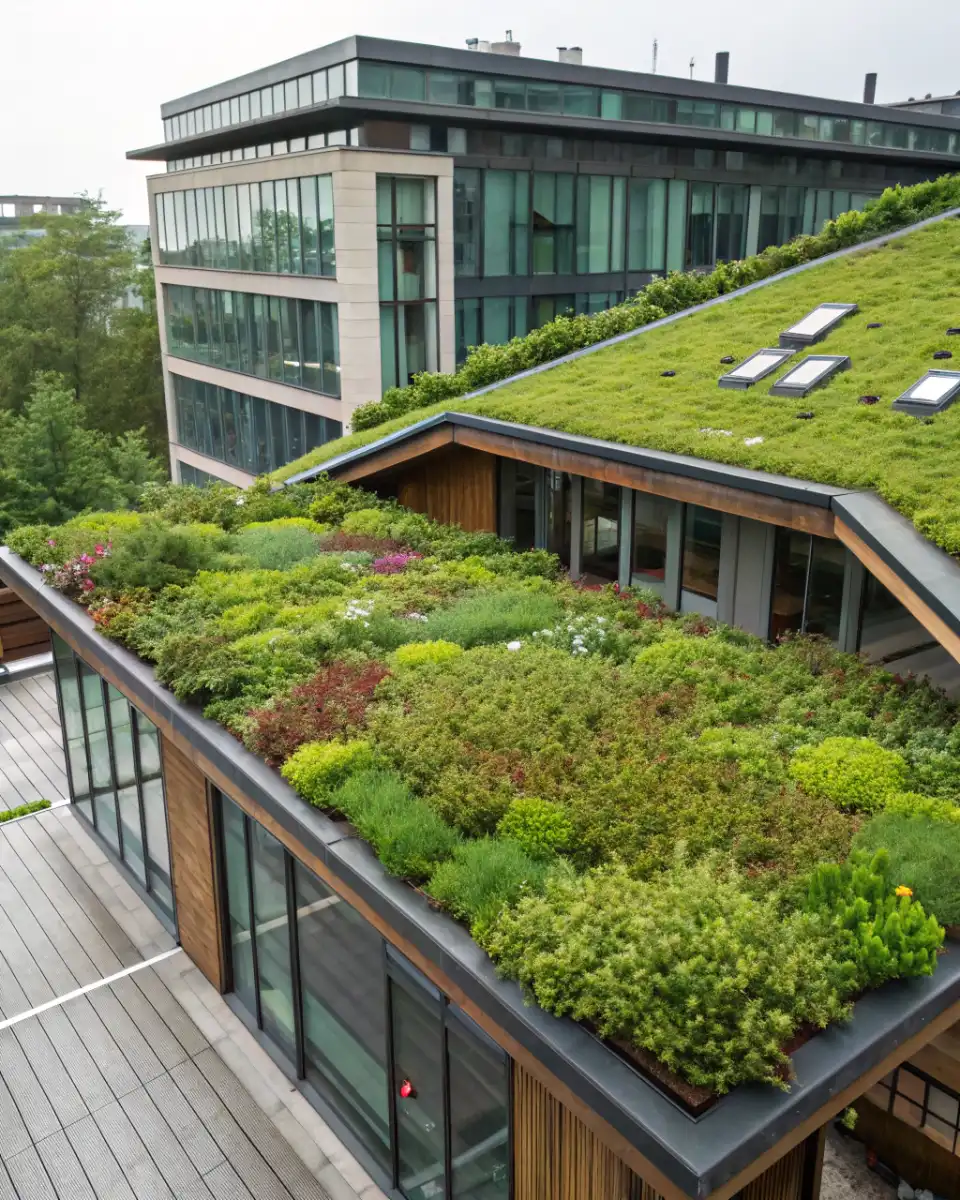
Green Roofs are living ecosystems incorporated into roofs that contain vegetation and soil, naturally mitigating stormwater, offering heat reduction, and improving air quality.
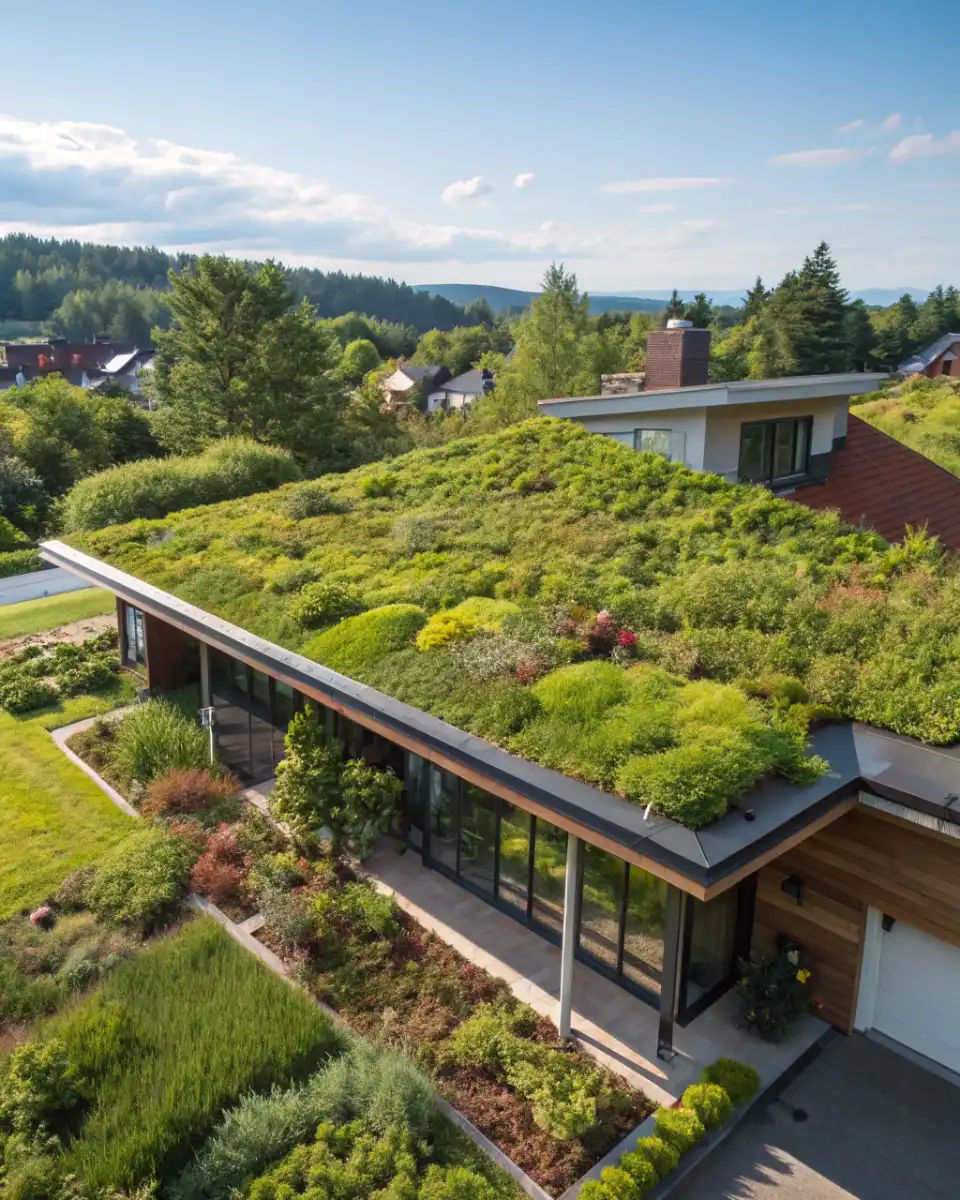
Cool Roofs are built with reflective materials which reflect more sunlight and heat than traditional roofs, enhancing energy efficiency.
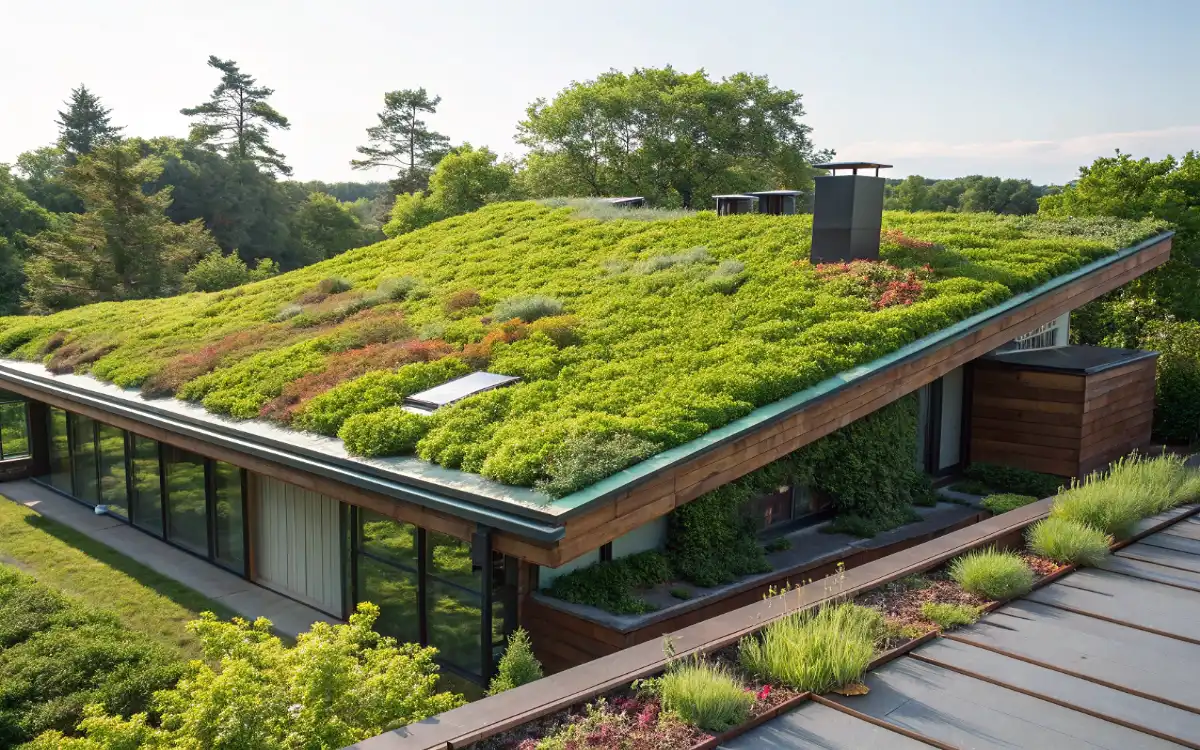
As of 2025, it will be possible to combine new technologies to design hybrid, platform-based, green roofs that can adapt to various roof slopes – from flat to steep.
They can also integrate solar panels and other renewable technologies without compromising roof waterproofing. This results in holistic improvement of building performance.
Environment and Economy, the Greenest Roofing
· Addressing Urban Heat and Pollution
Eco roofs can cool rooftop surface temperatures up to 56°F and nearby air temperatures up to 20°F. This cooling effect helps in countering the urban heat island effect – where cities, due to asphalt and concrete, become much warmer. This drop in temperatures helps in cooling the cities and makes them more livable.
· Stormwater Management
Green roofs help absorb and retain rainfall, which protects the city sewer system from flooding, and helps in disencumbering pollutants that drain into water bodies. Some green roofs retain as much as 80% of the rainfall and provide green filtration for up to 80% of stormwater.
· Energy Savings and Longevity
The insulation provided by cool roof coatings and vegetation on eco roofs helps reduce the need for air conditioning during the summer and heating during winter.
These roofs can reduce cooling demand by as much as 70%, which saves money and shrinks carbon footprints. Furthermore, eco roofs preserve the roofing materials underneath the eco roofs by protecting them during harsh weather, which also helps them last longer.
· Promoting Urban Biodiversity
The greenest eco roofs foster urban wildlife by offering habitats for pollinators, songbirds, and beneficial insects. To further promote resilience and biodiversity on green roofs, they can be planted with native species to help combat pest and disease pressures and increase ecological value.
· Economic and Social Impact
Cities around the world are beginning to recognize eco roofs as a sustainable urban architectural practice. This trend is a response to the economic opportunities of unrevealed green jobs in eco roof design, horticulture, and long-term maintenance.
These jobs are now the target of public investments in eco roof incentives and policies, such as those observed in Denver, Toronto, and Chicago.
Latest Innovations in Greenest Roofing for 2025
· Platform-Based Green Roof Systems
This new technology provides a structural ‘second roof deck’ to the structural waterproof deck, increasing structural capacity and creating a permanent rooting zone.
These systems can securely hold solar panels and other amenities intended for roof penetration, such as railings and green roof systems. This unique design takes the challenge of green roofs maintenance and offers a variety of roof functionalities.
· Bio-solar Green Roofs
Bio-solar green roofs combine solar technology with greenery which increases the photovoltaic systems’ efficiency by heat dissipation. This also provides cooling for the greenery which supplies a combined economic and environmental benefit.
· Advanced Sustainable Materials
Increasingly common are the materials that come from the recycling of industrial waste as well as sustainable biomass. These materials decrease landfill waste and reduce the embodied carbon of a building’s roof, highlighting the values of a circular economy.
· Smart Roofing Technology
Green roofs can now have IoT technology as sensors that track and report the integrated moisture, temperature, and overall health of the roof vegetation. This enables more proactive roof work as well as optimized water and energy use for overall maintenance efficiency.
Practical Consideration: Roof Replacement and Maintenance
Some of the main practical considerations when specifying the cheapest and most sustainable roofing are:
- Roof Slope: Green roof systems can work with angles ranging from completely flat to verti-cal (0–90 degrees). Platform-based designs can work with varying inclines while ensuring waterproofing.
- Roof Waterproofing: The waterproofing of a living roof is a built and planted roof and building protection down waterproofing membranes is a building and environmental protection.
- Roof Maintenance: Maintenance is required to keep the roof healthy, with more upkeep popular for residential use being extensive green roofs which are designed to allow minimal maintenance.
- Integration with Existing System: Incorporating renewable energy systems alongside building HVAC systems improves efficiency and comfort in use.
Greenest Roofing Options for Urban Living
| Feature | Extensive Green Roof | Intensive Green Roof | Cool Roof | Platform-Based Green Roof |
| Vegetation Type | Low-maintenance sedums | Shrubs, small trees | Reflective material coatings | Various, including solar panels |
| Maintenance Level | Low | High | Minimal | Moderate |
| Weight Load on Roof | Light | Heavy | Very Light | Moderate to heavy |
| Stormwater Retention | Moderate | High | Low | High |
| Energy Efficiency Impact | Moderate cooling | High insulation and cooling | High cooling by reflectivity | Combines insulation + solar boosting |
| Suitable Roof Slope | Flat to low slope | Strong structural support needed | Any slope | Adaptable 0–90 degrees |
| Roof Waterproofing Needs | Essential root barrier | Enhanced waterproof layers | Standard membrane | Advanced integrated membranes |
Conclusion
2025 will provide the greenest and most innovative solutions in urban construction and environmental care. Eco roofs combine the use of natural ecosystems alongside sustainable materials and state-of-the-art technology to tackle high heat, stormwater, and biodiversity challenges, producing energy and cost savings.
The greenest roofs fulfill urban environmental living demands and pave the way for the resilient cities of the future. With the increase in urban density and the construction of green roofs coupled with sustainable maintenance and roof replacement, the urban environment will live in sustainable health and vibrancy. This trend is the greenest solution for sustainable urban living.
For More Roof Repair and Maintenance Visit Classic Roofing Restoration Page